
Cammie Doder (00:05):
Welcome to Money Tales, where Money Gets Personal. I’m Cammie Doder,
Sandi Bragar (00:09):
And I’m Sandi Brager.
Cammie Doder (00:12):
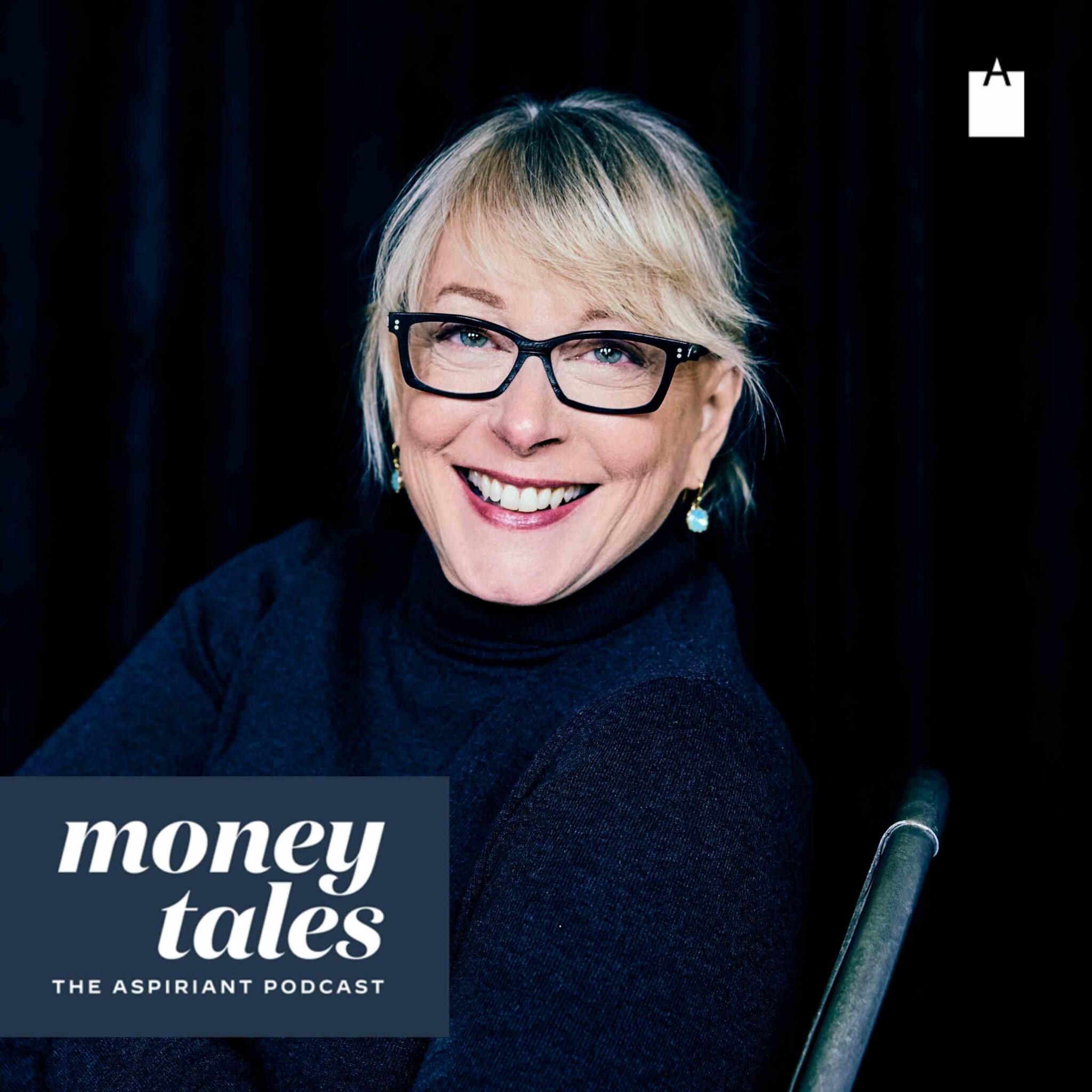
Margaret Andrews spent the first part of her career as a CPA before eventually teaching leadership, emotional intelligence, creativity and innovation at Harvard. Along the way, one comment from a boss changed the trajectory of her life. He told her she lacked self-awareness. It stung deeply. Instead of dismissing it, Margaret decided to understand it. That moment sparked decades of work, helping people better understand themselves, their motivations and the invisible beliefs shaping how they lead work, and even how they relate to money.
Sandi Bragar (00:49):
Here are three money conversations. This episode will help you navigate first, how childhood messages about money shape adult financial decisions. Margaret grew up in a family where money was rarely discussed directly. Yet she absorbed powerful lessons about scarcity, education and security that stayed with her for years. Second, why defining success for yourself is harder than it sounds. Career titles, income and prestige can become easy stand-ins for fulfillment. Margaret shares why Real clarity comes from understanding the values underneath the goals. And third, what financial freedom actually means for Margaret. Feeling rich has less to do with accumulating wealth and far more to do with having the freedom to spend your time in ways that feel meaningful and aligned with who you are. Now it’s our pleasure to bring you Margaret’s money Tales. Margaret Andrews, welcome to the Money Tales podcast.
Margaret Andrews (01:49):
Thank you so much. It’s great to be here.
Sandi Bragar (01:51):
We are so delighted that you’re here. And before we get to your money story, I want to talk for a little bit about fraud. It’s something that has come up in lots of different ways on money tales in recent episodes. And I want to highlight something we’ve shared with listeners quite a bit, which is make sure that you are talking about money frequently with yourself, with your partner, spouse, family members. And as part of those conversations, make sure you’re looking at your financial accounts and you want to be looking at transactions specifically in checking accounts on your credit card statements. Any place where you have some amount of money that you’re writing checks on or debiting against or charging against, because there has been a huge uptick in fraud. We’re seeing this across our client base in our personal lives as well. And what a lot of people don’t understand is that you have a pretty short window in most cases to identify and report fraud to your financial institution in some cases as few as 30 days.
Cammie Doder (02:59):
Oh, wow.
Sandi Bragar (02:59):
And this is really important because some fraudsters will utilize your credit card to charge smaller amounts because people don’t tend to look at those quite as much, and you don’t really see that your account balance is going up. Some fraudsters are taking checks that you’ve written and somehow they’re getting ahold of them and they’re changing the name of the payee. And in a world where we can all deposit checks through our mobile apps, check fraud is just spiraling. There’s not as much of a check on the validity of checks that are being cashed. So I just wanted to share this. A lot of people aren’t aware of the 30 day period. Fraud is probably one of the easiest ways to lose money, durably. And it’s no fun. No one wants to be a victim of this. You work hard for your money to earn it, to protect it.
Cammie Doder (03:49):
Sandi, it’s so important, and I appreciate you saying the 30 days because I am a guilty person who sets aside my Fridays to do a review of my financial situations, and then I blow it off. It becomes the lower priority of other things I want to get done. But now you’re incentivizing me or reminding me why it’s super important and because you get overwhelmed too with Amazon and all the things that come through your accounts. Oh, it’s just so much. And also the other thing I set up are alerts. I really appreciate the alert systems. They have to say, this charge went through. So you can say, well, wait a second, what happened there? Oh, right, I did charge that or not.
Sandi Bragar (04:31):
That’s right. And I would say the world has moved to electronic payments, which I think are actually safer. So not that many people are writing checks as much these days, but if you are writing checks, make sure that you’re not only looking to see if the check was deposited, but take a look at the electronic copy of the check that your bank usually makes available to you to make sure that it was actually written to the person that you intended it to be written to. And if at all possible, use your bank’s check writing feature, meaning through bill pay, they can cut checks for you. That’s better because when the bank, the financial institution cuts the check on your behalf, it doesn’t tend to have your direct account number at the bottom. It’s usually a bank’s master account, so that protects you as well because some folks, some fraudsters out there will take checks that they’ve gotten ahold of. All they need is a number and a bank account number, and they will go and have new checkbooks written on your account so that they can have checks to write on your account. It just gets kind of crazy. Be vigilant out there. The world is not as safe as we’d like it to be with our financial assets.
Cammie Doder (05:41):
Don’t be fearful, but be proactive. I appreciate that, Sandi. Well, it’s my pleasure to turn our conversation over to you. Margaret. Would you start us off? We can find out if you’ve ever experienced any fraud, which I hope you haven’t. But would you start by introducing yourself and share a couple pivotal moments that impacted who you are today?
Margaret Andrews (06:00):
So I’m Margaret Andrews, and I’d like to say I’ve had a checkered career. So I started my career as a CPA in San Francisco, and now I teach leadership and emotional intelligence and creativity and innovation at Harvard. I also just wrote a book on leadership and I do speaking in that area. So it’s been a long strange trip in between those two things. In terms of pivotal moments around money, especially when I was younger, I was thinking about that before we started. And I don’t remember having money conversations in my family when I was younger. It just wasn’t really talked about. But somehow I knew that we didn’t have a lot, but it was never explicitly, there was no budget shared or these kinds of things. It is interesting. I hadn’t really thought about that before.
Cammie Doder (06:55):
And when you look back to that time, how did you know you didn’t have a lot if it wasn’t being talked about?
Margaret Andrews (07:02):
I don’t know. That’s what I was thinking. I was thinking, I’m thinking my parents must have said something like, well, we’re not made of money. Actually, I do recall hearing that or my dad saying, money doesn’t grow on trees,
Cammie Doder (07:15):
Those
Margaret Andrews (07:15):
Kinds of things. But we never really talked that much about it. It was just more of, okay, let’s do it because this is something that’s worthwhile or now we don’t really have the money for it. And actually, now that you’re prodding me on this, I’m thinking that in my family growing up as kids, we could make anything sound educational. It got the go ahead. So there was some education. Education was huge in my family because my dad grew up very, very poor. He got a full ride scholarship to MIT, and that changed his life. Wow. Oh wow. Therefore, he will look at education and say it turned everything around for him. Therefore, my parents met and got married at MIIT. So we were big on education.
Sandi Bragar (08:08):
So marker. With all of this in mind, an emphasis on education, not so much an emphasis on money or talking about it. I’m curious, what was your first money memory?
Margaret Andrews (08:21):
I think what it was, oh boy. When I think back to it, I remember I got an allowance and I don’t know what it was. It wasn’t a lot of money a friend. And whenever I would get that allowance, we would walk to the grocery store and in Southern California, back then they used to have these big in the grocery store, big vats, I’m going to say
Cammie Doder (08:45):
Bins
Margaret Andrews (08:46):
Of candy. The bins of bins of candy. I still remember Brocks was the, do you remember this? And so they had all these different ones. It was called Brock’s mix, a bag or something like that. So you’d get this bag and you just fill it with whatever you want. And of course it’s like a buffet. I don’t want to eat that much, but I’m just try a little this little this, et cetera, and all of a sudden your plate is overflowing. Well, that’s what happened with this bag, was it? Oh, a few of these, few of these. And next thing you knew you had this very big heavy bag. And that’s where my allowance went.
Cammie Doder (09:20):
That’s a good place for it to go. Candy is key. And I’m curious with this underlying priority is education. I love that. For your negotiation skills, you brought in how it was going to educate you when you went off to college, how did you decide that becoming a CPA was the right route for you? Were you thinking about a stable career? Were you just excited about asses and liabilities and like,
Margaret Andrews (09:49):
Whew, that balance sheet balance, Woohoo.
Cammie Doder (09:51):
Balance sheets are always exciting.
Margaret Andrews (09:54):
I think it was two things, well, maybe even three. One is that I was always good in math and numbers never scared me. And so accounting is just numbers. It’s more addition and subtraction and seeing if things make sense. So that was one I found that it came easily to me. But the other was kind of a blend of influences from my parents. My mom, I think from her, I always learned that you decide what you want or what you want to do, and then you figure out how to make it happen. Her thing was never count something out in the beginning, too expensive. She said, figure out what you want and then you’ll figure out a way to get it.
Cammie Doder (10:36):
And
Margaret Andrews (10:36):
I always thought that that was really helpful and my dad and my mom, but I would say more my dad, because of how he grew up, he was adamant that I graduate college with a saleable skill. And so I will tell you my favorite class at uc, Berkeley was one called Forms of Folklore by Professor Allen Dundas, a fabulous class. And I think about it all the time, but studying folklore probably wouldn’t have been an option in my family, but a CPA that would work.
Sandi Bragar (11:10):
You chose a career path that allowed you to generate a nice lifestyle for yourself, and then you deviated it a certain point, Margaret, and you went off maybe the checkerboard a little bit in a different direction. Tell us, as you were making your pivots across that board as you have been making them, how does money play a role in the decisions that you’re making and how are you reaching those decisions?
Margaret Andrews (11:38):
In truth, I don’t really think about money all that often. I think about what I want to do and how I’m going to get it, and sometimes that involves money. I remember one time when I was doing strategy consulting, long story short, I got an offer to run the MBA program at the MIT Sloan School of Management. So I was going to take a pay cut to do that, and I had people tell me or ask me, how can you do that? You’re trading off this for that? And I said, you know what? I am rich every day. I love what I do, and I truly mean that to me. If you can do something that you love, it’s very worthwhile.
Sandi Bragar (12:23):
Is there anything else you would put in that definition of rich?
Margaret Andrews (12:26):
I never think of the word rich, but I think of, even though I just said it, I think of that as freedom, really. I bet that’s a term you hear a lot. It’s the freedom to be able to do what you want to do. And it doesn’t mean you have to have a lot. And in fact, in a lot of my classes, I use these six questions to help people really more deeply understand themselves. And one of them is around success. I ask them, how do you define success in your personal life and your professional life? And I say, go to this long spiel about your definition, not your parents’ definition, not societies. And then they think for a while. And I said, okay, so if you had something on your list that success to you is being CEO of this organization or starting a business or having X dollars in the bank when you retire.
(13:18):
I said, you haven’t gone deep enough. What does that mean? Why that amount of money? Why that position? Because then you’re actually getting at values. Because a lot of times somebody will say, I want this amount of money. I want to retire with this amount of money. And I say, why that number? What’s so important about that number? And I heard somebody one time say, I want to live near the beach. And I thought, well, there are lots of beaches out there. If you want to live in Newport Beach, well yeah, you probably need that amount of money and maybe more, but there are a lot of other beaches. Maybe you don’t have to have a castle. Maybe you can have a smaller cottage or something. And that really got them thinking, oh, there’s different ways to think about this.
Cammie Doder (13:59):
I think it’s incredible that you asked those next level questions. You’re teaching at Harvard, you’re teaching about leadership, and it is a pretty common assumption that leaders are driven for success winning, and our first metric for winning is often money. I am curious, as you’ve taught, and in your experience at Sloan, have you seen people’s perspective on what successes evolve? Has it changed in recent times? What have you seen? What are trends?
Margaret Andrews (14:36):
That’s such a great question, and I think the answer is pretty nuanced. We always talk about the different generations and things like that. And I would say, yeah, and a lot of times the current generation is just like we were at that age, right? But we have the benefit of experience in realizing that not all things we thought at that time were actually going to make us happy. I will say that my own kids, I think prioritize their whole life more than I ever did at their age, and I’m actually proud of them for that. I think they understand the trade-offs, and I think that’s a great thing. But the other thing I’ll say is that I think our perception of success changes as we get older. So if you were to take MBAs from last year, 10 years ago, 20 years ago, et cetera, I think their metrics of success would be exactly what you said, Cammy. It’s all because it’s tangible. There’s a number there. It’s not a feeling or something like that. So yes and no is what I would say on that one. That’s
Sandi Bragar (15:45):
Right.
(15:45):
I think this is so fascinating because you’re pointing out the benefits of numbers and also the downsides to them too. Numbers don’t capture everything. And something that you mentioned a moment ago, Margaret really struck a chord with me, which is the societal pressures, society’s definition of success, choose your own definition. I think for young people that can be very difficult. Even for older people who’ve had a lot of life experience, it can be difficult because once you’ve been doing something for a while, you tend to lock your identity to it. And so it can be hard to pivot away because society and your community are expecting things of you. I’m curious, as a leader and someone who helps develop leaders, how do you encourage people to be thinking about breaking free of the chains of others’ expectations in order to achieve true success for themselves and come up with their own definition?
Margaret Andrews (16:49):
I think I use questions a lot. How did that feel? What did you think? But I also think that people have to be ready for it. There are times in our life that we really are go, go, go. And that’s because of who we are and where we are, what age and stage of life we are. That old saying, when the student is ready, the teacher appears.
Cammie Doder (17:10):
Yes. When
Margaret Andrews (17:11):
I definitely have people in my class that are ready and I’m the teacher and I have people that are not ready, and so I’m not that teacher, but at some point they’ll get there. But it is hard. It is really hard. We get a lot of, I’m going to say subtle or not, so subtle pressure, I think from our parents and from societies. And I always think of a friend of mine who’s a PhD in economics, and his mother always says when she’s introducing him, yes, he’s a doctor, but not the useful kind,
Sandi Bragar (17:38):
Right?
Cammie Doder (17:39):
Oh, moms know how to just cut right to it.
Sandi Bragar (17:43):
That’s funny. Well, I was asking because this comes up a lot of times with clients. They come to us, we start working together, we get to know who they are, what’s most important to them, and how we can help them plan. And they have one idea in mind, but as we go deeper and deeper, sometimes they come to understand for themselves that where they want to be is someplace completely different. And I remember working with a couple where the husband had grown a business throughout their marriage and the wife was at home raising the kids. And when he was ready to stop working in the business and transition out of it, she wanted to create her own business. And that surprised both of them. They had totally different expectations of each other.
Margaret Andrews (18:31):
I think that that’s true. And so oftentimes you hear about people failing at retirement that they think, oh, I want to go live on the beach. And then they get there and two weeks later they’re like, I’m bored. What am I going to do? So I just think you have to just like if you look back on yourself at 18 or 28 or 38 or whatever, you were different. You wanted different things at that time for yourself, for the world, whatever it is. And I think we just have to keep in mind that when we are ready to retire or if we never retire, that we’re going to potentially want different things.
Cammie Doder (19:11):
Margaret, you wrote this book titled Manage Yourself to Lead Others. Why? Great Leadership Begins With Self Understanding. The title is really provocative. Immediately read it. I was thinking Leadership and business, but then I realized, no, this is Leadership in Life. I would love for you to talk more about your experience. Why did you write this book? Why was it so important to you, and what are you hoping people take out from it beyond business?
Margaret Andrews (19:41):
So glad you said that, that it’s really about leadership and life, because that is true. Anything that we do, if we do it to become a better leader, it actually makes your life better. Just your personal life, you’re just a more satisfied person. So I wrote the book, actually, I had never intended to write a book. People used to ask me, so would you need to write the book? I’m like, ah, never. I changed my mind. I would say five or six years ago, I was doing more work in public speaking. And through that, I met a lot of people who had just published a book. And I thought, oh gosh, here, I’m getting into speaking. I did this backwards, right? I should have written a book. So I wrote the book afterwards, and I will say it was really everything I’ve learned from teaching and from my students and things like that over the years. But what started the whole thing was my own leadership foibles. I had a boss tell me one time, he said, you’re not self-aware. And it was not said in a nice, oh, let me help you dear. It was said in a kind of a, you’re broken and can’t be fixed sort of way.
Sandi Bragar (20:46):
That must not have felt good.
Margaret Andrews (20:48):
No, it did not. It did not. But I do tell people, I said, sometimes really good gifts, valuable gifts come in very ugly packaging. And that was exactly what was going on. But it was a gift in many respects that I wasn’t very self-aware. I thought I was kind of rocking it, but then realized later that some of my team were afraid of me. Certainly my relationship with my boss was underperforming. So these are all signs of somebody who’s not very self-aware. And so I started looking into all kinds of different things to say, I want to fix this, right? I do not want this to stand what I learned. I started applying to myself, and then I created a class almost 20 years ago at Harvard on it, and people say, oh, why did you create the class? And I always ask them, have you ever seen the movie Alien? There’s that iconic scene where the alien just bursts out of that person’s chest. I’m like, that was what the class was like. It just had to be born. It pulled me. I felt like the class in me just pulled me along. And that was kind of the start of the whole thing.
Sandi Bragar (21:53):
So books take a lot of time to write, and there’s a numerous amount of money decisions that go into them. You’re someone who doesn’t really think about money a lot. You have a goal that you set for yourself and you go to achieve it. How did you reconcile the two?
Margaret Andrews (22:10):
Yeah, I mean, it did take a lot of time, but after I decided I was going to do it, it did take a long time and I got halfway through and just said, oh, this is trash. And I threw it in the trash and started over again. I always say, most people, unless you know you’re Stephen King or something, don’t write a book for money. I wanted to write it for Impact. I had this class, and so I can work with a certain number of people per semester, and then I did a professional or executive education class and I could work with more. I started speaking. So now that Circle widens and a book kind of widens it a little bit more. So my goal really is to improve the craft of leadership, because if I get better and you get better, there’s that ripple effect. And I try to get people to think more about their best boss and their best leaders than the bad ones. I mean, we learned from both, but there’s one we want to emulate more than the other.
Cammie Doder (23:08):
Indeed, you talked about these six questions, but I’m hoping to boil it down, your top three tips to understand yourself better.
Margaret Andrews (23:18):
Yeah, I would say those six questions are really boiled down to understanding your backstory. And I think this is around your questions around money. I mean, we could take those six questions and we could make them about money, and they would probably still be very, very similar. But to me, it’s around how did you get impressions of yourself? The most common one I hear, the first question is about who and whose thinking has shaped you. And I said, these are people that helped you and people that hurt you. These are friends and lovers and enemies. And I oftentimes hear something to the effect of, oh, my third grade teacher told me I wasn’t good in X. And it took me 30 years to figure out that wasn’t true. First of all, it breaks my heart that any teacher would say, you’re not good at this. Right? They could say, you’re not good at this yet, right? Let’s help you get better. That’s so different. But they just said, ah, don’t go into that. What gives me a lot of pleasure is when people say, yeah, but that wasn’t true, or it’s no longer true. They figured it out themselves.
Cammie Doder (24:26):
That’s a beautiful way of putting it. I have to tell you, I had a teacher in seventh grade crawl onto her desk and tell me I was horrible at diagramming sentences. And in hindsight, I think she was trying to motivate me, and that was her way of really encouraging me, and it really made me question, I must be horrible in English. And all the, it took a while to your point to understand this is an opportunity. Yeah. You sound
Margaret Andrews (24:52):
Pretty articulate to me.
Cammie Doder (24:53):
Thank you. Oh my goodness.
Margaret Andrews (24:55):
I know somebody who wrote a book and had a very similar story like this person’s like, God, oh, don’t write anything. Oh, this is awful. And she sent the book to that teacher.
Sandi Bragar (25:07):
Look what I did.
Margaret Andrews (25:08):
Look what I did. Yeah,
Sandi Bragar (25:09):
Yeah. Those enemies can shape you just as much as the friends.
Margaret Andrews (25:14):
Yes, yes. Exactly. So I would say yes, it’s that backstory. It’s understanding what your context is, and then also where do you want to go? Your definition of success in your personal life, in your professional life, and then figuring out how you get there. What do I need to start doing or stop doing? And then the book is around how do you do those different things?
Sandi Bragar (25:37):
Yeah, I love that. And you’re right, it is very parallel to money conversations. I think about just the financial planning process starts with where are you, do you want to go to? What do you need in order to fill in the gaps along the way? And certainly having some contextual information about your own relationship with money and your backstory is really helpful because it can help guide where the areas where you might need to get better at something money related along the way. So cool. Hey, Margaret, what’s your next money conversation going to be and who’s it going to be?
Margaret Andrews (26:11):
Probably with my daughter. She’s going to go to grad school.
Sandi Bragar (26:17):
Yay. Congratulations to her. Thank
Margaret Andrews (26:19):
You. Yeah, she’s very excited. We’re excited for her. So it’s going to be around the grad school and how we can help her, but what she’s going to be doing.
Cammie Doder (26:29):
Oh, such an important conversation.
Sandi Bragar (26:31):
Will you bring concepts from the book? I’m sure you’re bringing them into your daily life in raising your children, but for that particular conversation, I’m just curious.
Margaret Andrews (26:40):
Actually, my kids, I think are pretty steeped in this stuff
(26:44):
In the sense of all of them have always kind of followed what their inner voice said. And I remember one time my son was in grad school and he wanted to do something, and it was kind of against the rule. So he finds this one, Dean agrees with him, and he figures out how to do this thing. And I was talking to him about it. I said, oh, that’s so amazing. I said, I’m so happy for you to do that. I said, I don’t think I ever would’ve had the guts to do it. And he goes, mom, he goes, where do you think I learned it from? And I was so, take it aback, but that was probably the best compliment he could have ever given me. Right? Like I would. And he said, yes, that’s exactly what you would’ve done.
Cammie Doder (27:29):
I’m not surprised. You said your kids learn through you and you said that they have a whole life perspective and it’s what a gift.
Margaret Andrews (27:37):
It is a gift. It is a gift, yeah. I learned from them.
Cammie Doder (27:41):
Yeah. Don’t we? All right. Well, this has been a gift for us to speak with you. Would you share with our listeners where is the best place for them to find you?
Margaret Andrews (27:50):
I would say I’m going to give ’em two. One is through LinkedIn. That’s really the only social that I do. And I’m Margaret Andrews on LinkedIn. The other is my website, which is margaret andrews.com. So pretty easy to remember.
Cammie Doder (28:05):
Wonderful. Well, thank you for bringing your whole life to us and sharing your money stories, and it’s been incredible talking with you on Money Tales.
Margaret Andrews (28:14):
Well, thank you so much. It’s been a pleasure.
Sandi Bragar (28:23):
What a fun conversation with Margaret Andrews.
Cammie Doder (28:25):
It was. She’s incredible. Sandi, when you think about our conversations on money tales, and we always find this profound, like you’re beginning really understanding yourself, it transcends everything.
Sandi Bragar (28:40):
It does. And I appreciated how Margaret talked about not only looking at the people who provided positive experiences to shape you. In this part of our conversation, I’m thinking about it shaping your money habits and your thoughts and feelings and perspectives about money, but also the people who have been in your life where they’ve created negative experiences that you’re learning from. Being aware of both and not over rotating on the negative experiences is really important. If someone tells you you’re not good at something or you don’t have the skills to be able to do something related to money that sticks with you
Cammie Doder (29:24):
Absolutely in
Sandi Bragar (29:24):
Life,
Cammie Doder (29:25):
And I like the idea what you just said there, let’s just use it as an opportunity to say, oh, you mean that this is an area I can learn more about? How exciting.
Sandi Bragar (29:33):
You might not be good at it yet.
Cammie Doder (29:35):
Not yet. Oh, I love that one.
Sandi Bragar (29:37):
I can think of many clients who’ve said that they were told early on that they weren’t good at math, and they’ve translated that to think that they’re not good at money
Cammie Doder (29:49):
And
Sandi Bragar (29:49):
There’s nothing that could be farther from the truth. Anybody could be good at money. First, you need to determine for yourself what does good at money mean? There’s no societal definition for that.
Cammie Doder (30:00):
Thank you for saying that. I’m so important. What is good at money?
Sandi Bragar (30:05):
That would be another good question to ask yourself if that’s something that you’re caught up in. But whatever good for money means to you, you can absolutely be good at it if you put your mind to it. Maybe there’s more education you need. Maybe there’s more experiences you need. Maybe you already are good at money. You just aren’t recognizing that in yourself.
Cammie Doder (30:26):
Okay, Sandi, I’m going to break it apart. Start with defining what for you, good with money is, and then what are the areas you excel in and what are you not good yet? And then how are you going to get good at it? And we will remind listener. Remember, obviously there’s books and now we can all go to some AI bot, but you can also listen to podcasts. You can listen Ted Talks. There’s so many ways we can learn in today’s day and age, and it’s beautiful.
Sandi Bragar (30:55):
And just through simple money conversations with friends and family can also help add to it. And if you have a financial advisor, talk to your financial advisor. If you don’t have one, maybe consider engaging one to be able to help you think through, if anything you want to work on, to have a better, more empowering relationship with money. If that’s something that you’re after
Cammie Doder (31:21):
And we always love hearing from our listeners, perhaps there’s a topic that you’re not good at yet that maybe you’d like us to cover in one of our deep dives. Send us an email@podcastsatexperian.com. That’s podcast plural. And if you enjoyed this episode, we invite you to share it with a friend who also would benefit from listening to Margaret’s story. Thanks for listening to the Money Tales podcast. If you’ve enjoyed this episode, share it with someone you think would benefit from listening and leave us a review on your favorite podcasting platform. Your ratings and reviews help more people find our podcast. If you’re inspired to gain clarity and peace of mind about financial matters, don’t hesitate to reach out to our team at Aspiriant. Go to Aspiriant.com/start a dialogue. Or you can email Sandi and me at podcasts@aspiriant.com. See you next time.
What does self-awareness have to do with money, leadership and success? More than most people realize. In this episode of Money Tales, leadership expert Margaret Andrews shares how a single piece of difficult feedback early in her career sparked a lifelong pursuit of self-awareness, emotional intelligence and personal growth.
From her beginnings as a CPA to teaching some of Harvard’s most popular leadership and executive education courses, Margaret explores how the beliefs we hold about ourselves quietly influence our careers, relationships, decision-making and financial lives. Her story offers practical insights for anyone looking to become a better leader, make more intentional choices and develop a healthier relationship with money.
Margaret is a seasoned professional speaker, executive, academic leader and instructor whose work has been written about in a variety of publications, including BusinessWeek, Forbes, The Wall Street Journal and The Times of India.
Her course, Managing Yourself and Leading Others, is among the most popular classes and executive programs at Harvard. In addition, Margaret teaches Unlocking Creativity, Leading with Emotional Intelligence, Strategic Leadership, Creativity and Innovation, and It Depends: Unpacking the Challenges of Leadership. She is also the Co-Faculty Director of the Executive Program for Senior Life Sciences Leaders at Harvard Medical School.
In the academic arena, Margaret has been Executive Director of the MBA Program at the MIT Sloan School of Management, Vice Provost at the Hult International Business School and Associate Dean at Harvard University.
On the business side, Margaret started her career as a CPA in San Francisco and has also been a marketing executive and a long-time strategy consultant. She now leads The MYLO Center, a private leadership development firm.
Margaret earned an undergraduate degree from the University of California, Berkeley and her graduate degree at the Massachusetts Institute of Technology (MIT). Her writing has been featured in Leader to Leader, Training Industry Magazine and Psychology Today and her book, Manage Yourself to Lead Others, was published by Hachette in 2025.
Follow Money Tales on Spotify, Apple Podcasts or YouTube Music for more real stories that inspire thoughtful, intentional decisions about money.

with Neda Patra
with Anne Lester

with Lindsay Jurist-Rosner
with Margaret Andrews
with Bobbie LaPorte
with Uday Wagle
with Caroline Gaynor
with Dr. Charles Eckhart
with Jane Bond
with Denise Dunning
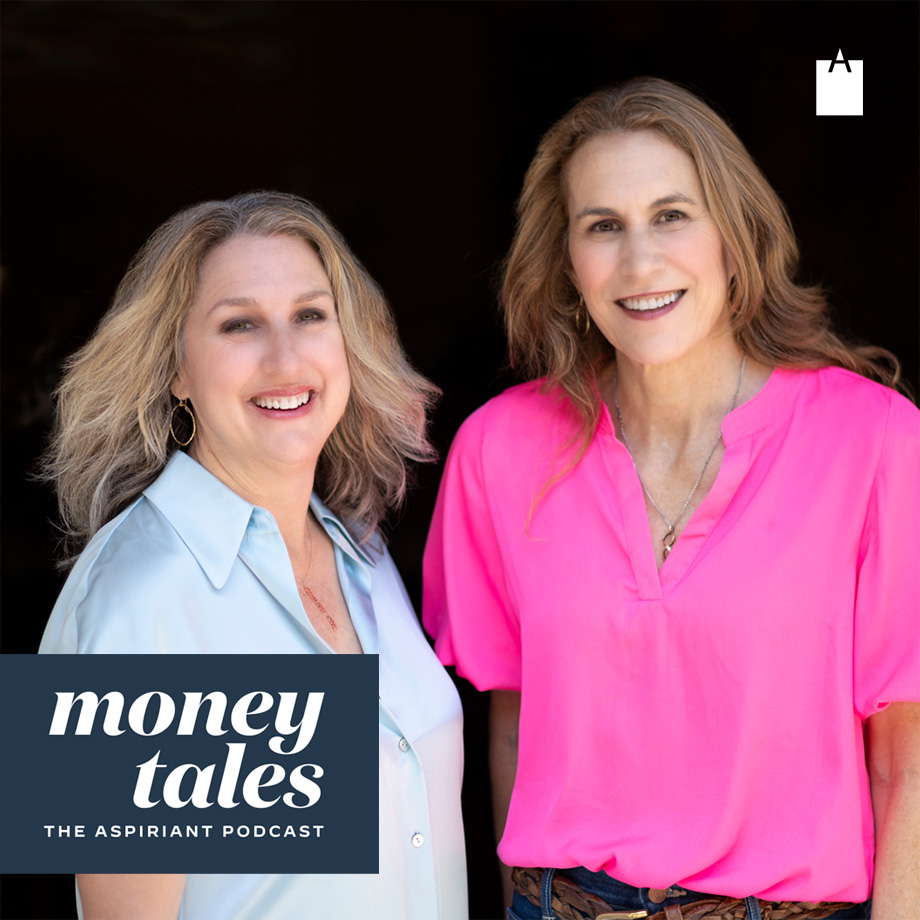
with Sandi Bragar and Cammie Doder

with Uma Viswanathan and Johann Berlin
 Talk to us