
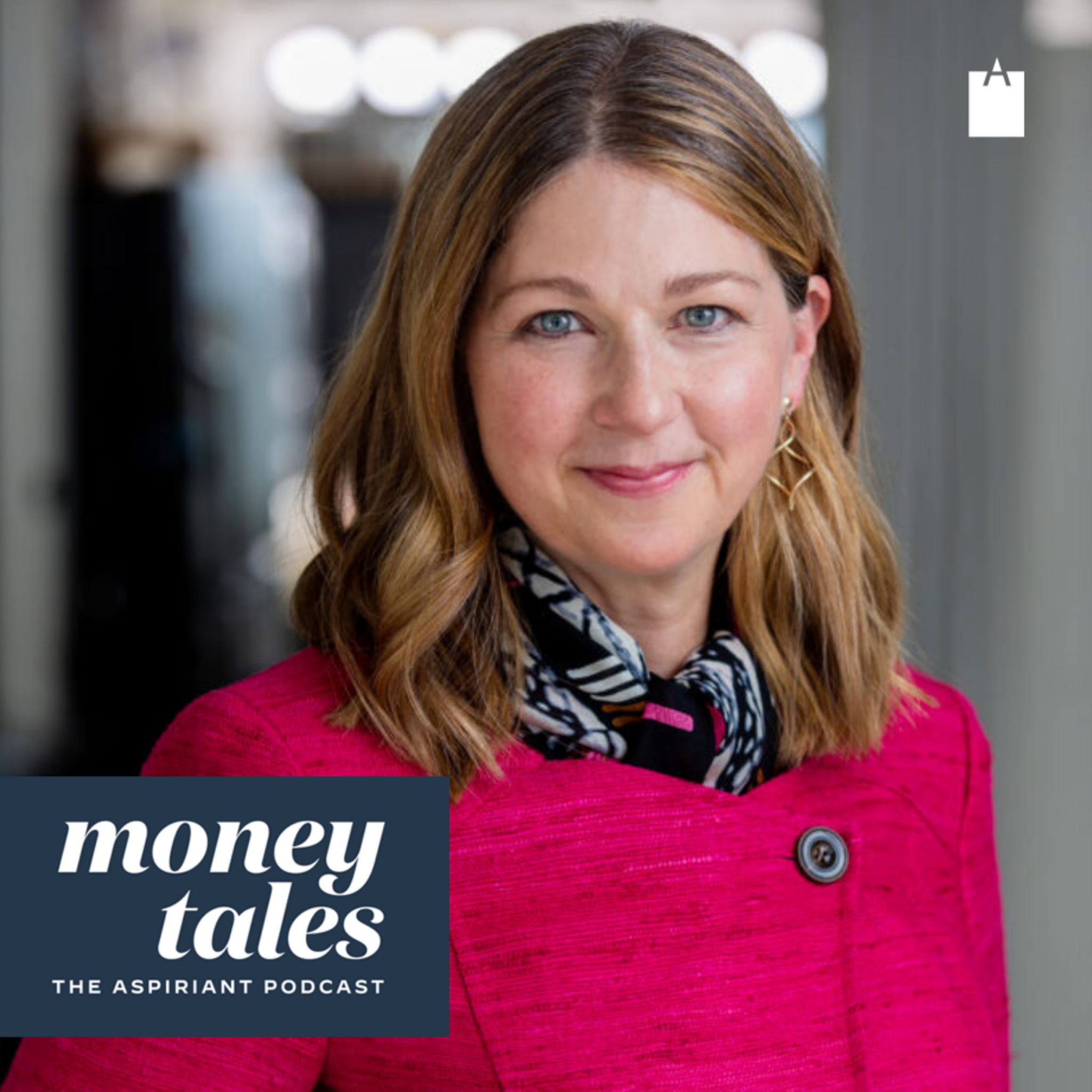
Cammie Doder (00:04):
Welcome to Money Tales, where Money gets Personal. I’m Cammie Doder
Sandi Bragar (00:08):
And I’m Sandi Bragar.
Cammie Doder (00:10):
Fresh out of college, Anne Lester thought she was doing everything right. She landed her first job, was earning a paycheck and was building an independent life. Yet she was also carrying credit card debt, struggling to save and making financial choices that felt right in the moment, but carried consequences she couldn’t yet see. Decades later, after becoming one of the country’s leading retirement experts and realized the answer wasn’t more discipline or more willpower, it was understanding how people actually make financial decisions. Today, Anne helps millennials and Gen Z turn money shame into money power. In this conversation, she shares the lesson she learned from her own mistakes and why building a better financial life starts with understanding yourself.
Sandi Bragar (00:58):
Here are three many conversations. This episode will help you navigate. First, why understanding yourself matters as much as understanding money. Financial success isn’t just about knowledge. Recognizing your own tendencies, triggers and blind spots can help you make better decisions and build habits that last second, how to make better trade-offs with your money. Every financial decision involves choosing one thing over another. Understanding those trade-offs can help you spend, save, and invest more intentionally. And third, the hidden cost of financial shoulds. Many of us carry rules about money that come from family society or our own expectations. Learning which rules serve you and which don’t can lead to better financial decisions. Now it’s our pleasure to bring you ands Money Tales.
Cammie Doder (01:55):
Welcome Anne Lester to the Money Tales podcast.
Anne Lester (01:59):
Thanks for having me. I’m excited to be here.
Cammie Doder (02:02):
Us as well. And we’re just back from our annual partners meeting, Sandi and I, and it’s, it’s such a special time to be together and it made me think about money because our partnership, Experian is a third of our people are owner operators. And our partnership is one where you buy into it. We don’t get issued stock options and get ownership that way. So we actually as ourselves and our families decide this is what we want to invest in for the long term and it changes the game. I would say that much more passionate, that much more caring about the future. And I’m also so appreciative of this commitment to independence, which is what we are trying to do and succeed our business with future owners because that too changes the business. We can truly stay focused on what’s our core and what we’re doing. But Sandi, I’m curious, as you reflect on our partner’s meeting, what were you thinking? What were some special moments for you
Sandi Bragar (03:10):
Talking about our independence and how important it is was wine camie? I think it really does set us apart from so many others in the wealth management space. And it’s an important characteristic as it relates to our clients because being independently employee owned allows our interest to be fully aligned with our clients. And that’s really important to us so that we’re committed to their success because our success is so heavily tied to theirs. So talking about that in an environment where in our industry there is a lot of consolidation, there’s a lot of strategic capital that’s come in over the years and really truly celebrating our independence was I think my biggest highlight. And also seeing partners that I don’t get to be in person with all that often. It’s just always such a pleasure to be together and I have the privilege at these meetings to give a toast to our clients at the beginning of the partners meeting at the first meal. So that’s always a real special moment for me.
Cammie Doder (04:19):
I agree. It’s really special to think about what we’ve built and as our CEO Rob talked about, it requires trade-offs and I think about that and our money decisions. There’s always trade-offs and we’re making trade-offs in these decisions. We’re not trying to sell for the top dollar, we’re trying to build a business that will last a lifetime or many lifetimes. And what an honor to be part of that. Well, it’s my pleasure to turn our conversation over to you, Anne. Would you briefly introduce yourself and share a couple pivotal moments that have influenced who you are today?
Anne Lester (05:01):
Anne Lester. I retired, which is a weird thing to say. Six years ago from a job where I was head of retirement solutions at JP Morgan Asset Management, I launched and managed the firm’s target date funds. Since then, I’ve wrote a book which was published two years ago called Your Best Financial Life, save Smart Now for the Future You Want, which is aimed at younger workers, gen Zs and millennials who may be feeling a sense of shame or overwhelm or despair frankly, at the state of their own finances. And I mean, I wrote that book for me. I wish I had had it when I was in my twenties because I, as a young adult graduating from college in the mid eighties was overwhelmed with credit card debt and didn’t understand really how to run my financial life at all. And I just want to make sure nobody else is stuck there and nobody else has to be.
(05:57):
And for me, a huge part of working my way out of the mess I was in frankly didn’t happen until I was building target date funds. I was managing billions of dollars of other people’s money and wrestling with these things myself. And it wasn’t until I started learning more about behavioral economics and understood more about how our own brains can, saying hijack makes it sound like you’ve been possessed by another being. But we are not wired for delayed gratification. And everybody lies on some spectrum of a whole bunch of different kinds of factors that we now can diagnose and map and measure. But it gave me permission to stop blaming myself and just say, okay, now I know what I do. My dad used to say when I was a kid that money would burn a hole in my pocket. I mean, it just does. And it gave me permission to just accept that I am the way I am and to start building safeguards around my own financial habits that kind of helped me dig out of the hole I was in and my family frankly, and kind of set ourselves on a much more healthy financial path. So that was a really big aha moment for me. In fact, the second chapter of my book is called You Suck at Savings. And it’s not your fault.
Cammie Doder (07:20):
It truly is written for you it sounds like.
Anne Lester (07:22):
Well, yeah, it was kind of, that was one pivotal moment was just accepting that I am wired the way I’m wired. I cannot grit my way through this. I cannot willpower my way through this. That doesn’t work. I have to do something else. And then the other really pivotal thing for me in writing the book, which is a couple of years ago now, not when I was in my thirties, was realizing that my parents who were in many ways phenomenal parents, didn’t teach my brothers and I anything about money, nothing. My dad was a professor and there was always enough money. And then he lost his job when I was heading off to college actually. And suddenly there was no money. But I never heard my parents have a conversation around budgeting or are there being a finite amount of money that had to be budgeted?
(08:13):
Right. What I heard were discussions about what the thought spending money was worthy. Right. Is this a worthy thing to spend money on? Are private music lessons worthy? Yes. Is travel worthy? Yes. Is a new outfit for the dance? No. Is it a good buy? Did you do your homework? Are you researching things? Are you being careful with what you’re choosing to spend your money on? And is it well made and well constructed? So I got a lot of good lessons about how to be a values driven consumer and how to make sure I bought quality things. But in this whole conversation never entered, do you have enough money to pay for it or not? Or you’ve got a hundred dollars, it needs to last a month. And I remember talking to my mom about this, I dunno, 10, 15 years ago. And she said, well, it was just obvious to us we didn’t think we had to teach you that and they didn’t have credit cards.
Sandi Bragar (09:08):
Do you remember your own internal dialogue with yourself when your parents were having these values-based decisions in the realm of money? Did you have questions and were there things that you were hoping that you asked at the time or that you were feeling?
Anne Lester (09:26):
No, no. I mean, I was a teenager, maybe I was in middle school, right? I was 12, 13, 14. And it was like, well there’s a dance. Can I get a new outfit? No, you don’t need a new outfit. You’ve got plenty of clothes. Can I have a new viola? Whoa, that’s a big purchase. Let’s think about this. Are you practicing? Are you getting better? Is this going to be something you’re serious about? Yes, we need to actually buy you a real instrument, not the music store cardboard thing that you started learning on, which is a smart way to get your kid to start playing. Lemme tell you, do not buy a big instrument right out of the gate or a piano. I was a really serious musician. They bought a really nice piano and they bought me a really good viola, but no to the new top for the dance, you don’t need one. Because
Cammie Doder (10:05):
That was the values and
Anne Lester (10:07):
I didn’t quibble with those values. Those were just the values of the house. My parents were somewhat anti consumerist, I suppose, academics like very frugal children of the depression, thrifty. And they just assumed we’d learn from them and we wouldn’t need to talk about it. And something else they didn’t do was give us an allowance, which drove me crazy because we always said, I’m going to the movies with my friends, can I have some money? Sure. Right. So I never got taught budgeting.
Cammie Doder (10:33):
How do you wish you were taught budgeting?
Anne Lester (10:36):
Well, I can tell you what we did with our kids, and actually there’s a fabulous book and I cannot remember the author’s name, and it’s at least 20 or 30 years old. It’s called Money Doesn’t Grow on Trees. And I keep thinking I need to remember that author’s name. I read that book and I thought this is the answer. And it actually started even before I read that book, when our kids were in nursery school, the nursery school asked us to give them a job around the house and to pay them some money and asked them to bring half of it into school to, I forget if they were saving up to put a chicken coop in or they were doing something as a communal activity in the nursery school. And our kids loved earning money. I said, okay, well let’s give them a dollar.
(11:15):
They had a dollar a week of spending money, and that was back when there were toy stores you could go visit and every week they’d say, we want to go spend our money. And so we’d go in there and $1 was enough to buy some really crummy junky little thing that would break instantly, but the cheapest Lego set at the time, the little tiny boxes I have two boys were $3. And so we said, well, you get a dollar every week, but if you don’t spend your dollar this week, we’ll give you an extra one for every week. You don’t spend your money.
Sandi Bragar (11:46):
So you have the incentive right in there. So
Anne Lester (11:47):
They got 50% interest straight a week, which was a great deal. And then we covered the sales tax
Cammie Doder (11:52):
Teaching you about compounding
Anne Lester (11:53):
Cruel lesson for a five-year-old. But they got delayed gratification instantly as five and seven year olds or four and 6-year-old, 10-year-old they were. And then the thing that money doesn’t grow on trees encourages parents to do, which we absolutely embraced, was as your kid is still in the household but getting older, you gradually give them more and more control over the discretionary money that you think they should be in control of. And that way they figure out what happens when they run out of money. And this book suggested clothing, which for my two boys would just meant that they would wear ripped clothing and holy shoes because they didn’t care. And I was like, all right, we’re not going there with this. If it had been a girl, maybe, but two boys didn’t care, so they would’ve just spent all their money on video games.
Cammie Doder (12:38):
And I’m super inspired. I have a daughter who has got her eye on a new dress and I haven’t yet done the giving her an allowance. And I would’ve loved the opportunity to use this as a teaching moment because she too likes to spend really quickly and it’s a great opportunity to say if you saved, you might have or maybe she would’ve saved because she’s learned for the things she really wants. So I’m inspired. Thank you.
Anne Lester (13:03):
Well, thank you. I do confess, I have a gift and sadly my older son has it too, to be able to walk into a store with no prices on anything and unerringly find the most expensive thing and think it’s wonderful, right. And it’s got
Sandi Bragar (13:14):
To have it. I think many of us have that special gift.
Anne Lester (13:18):
It’s not a good thing. I’m not proud of it.
Cammie Doder (13:21):
And you mentioned you started working, you implied that maybe you found yourself spending more than you were saving. Did I get that correct?
Anne Lester (13:30):
Oh, I think that’s a very kind way to put it. I have a lot of compassion for my 21-year-old self now looking back. So I graduated from college because of my parents’ debt free because that was their deal with us. You’re on your own for grad school, but we will cover college. And so I didn’t have any student loans. I went to work on Capitol Hill and first young workers on Capitol Hill make nothing. So half my take home pay was my rent, which was $400 a month, and then I had $400 a month to live on. And then I actually was kicking into the federal thrift savings plan, the 401k of the federal workforce, 5% because one of my colleagues told me I had to do that. So I did, but I wasn’t making very much money, so it was very hard to go skiing with my boyfriend.
(14:17):
And I knew that I needed to save up for the plane fair, but I didn’t realize I’d have to buy Lyft tickets or rent skis. So it was stuff like that that just kept getting me. And I went to Princeton and a lot of my classmates went into finance and they all had tons of money. So I was kind of feeling like a little bit of a need to try to not keep up. I didn’t, I wasn’t earning that money and I didn’t pretend I was, but still there’d just be the odd night out or whatever. So I just kept running up credit card debt. And then when I got my first bonus, which we did get on Capitol Hill, I had enough to pay off half my credit card debt and that’s what I was going to do. And then that night I was flipping through the newspaper and it was lit up in neon. There was a classified ad for a baby grand piano, and it was exactly the amount of my bonus.
Sandi Bragar (15:06):
So
Anne Lester (15:06):
I bought a baby grand piano.
Sandi Bragar (15:08):
Oh, you went for it.
Anne Lester (15:10):
It was meant. It was meant. Which again, in hindsight was really not smart financially and it made me really, really happy to have the piano. So I dunno, it all kind of worked out in the end, but I kept doing things like that, not really understanding that I couldn’t keep doing that. And I always felt if I could make the minimum balance on my credit card, then everything was fine.
Sandi Bragar (15:32):
When in life did you feel like you learned the lessons of your twenties and you became more financially astute? And how did you get there?
Anne Lester (15:43):
Part of it is your income goes up, which is enormously helpful. I had a great uncle who left me a little bit of money and that helped $30,000. So actually we were able to buy all of our apartment furniture with that. So we had to furnish an apartment, my husband and I, and then when we moved back to the states, I think we kind of gotten rid of all of our credit card debt. By the time I was in my early thirties, we were cashflow positive and then we bought a house and then you had a baby. And so then that whole thing, and then we started renovating this house. We are just serial, there’s this whole muddy pit thing that my husband and I share. So we kept finding things that were maybe not long-term wasteful. This goes back to my parents’ values. We’re making this house better and we’re living in the house. Whether we would’ve made more money putting the money in the stock market, I can’t tell you, but they were not silly things to do, but they certainly were not cashflow. Yeah,
Sandi Bragar (16:38):
You’re buying the asset and making it more comfortable.
Anne Lester (16:42):
Yeah, I’d say it was in my mid to early thirties when we were then getting overwhelmed with real estate costs and biting off more house than we could chew and then biting off more renovation than we could chew. So then I was about in my forties, I suppose it was about 41 maybe in my late thirties when I started doing the target date fund research, and I was like, I know what’s going on. I know how to fix this problem. And then I just set up a whole bunch of guardrails and thought, okay, this is not a choice thing. I can’t let myself make choices around if I’m saving or not. That has to go first because otherwise I will choose the wrong thing, the wrong thing. In hindsight, again, I would say none of what I did was outrageously foolish or bad according to my parents’ definition, but it wasn’t cashflow positive decision making.
Cammie Doder (17:33):
So you were working in a job that helped you come up with a game plan. You said something in your introduction that I really appreciated that you stopped blaming yourself, and I think this is really powerful and I’d like to dig into this some more because we all try and do things that we’re told we should do, and if that’s not your nature, then you won’t do it, but you figured out your guardrails and things like that. So tell us more about coming to terms with who you are as a non saver and then how you align that with what your goals were.
Anne Lester (18:10):
This is actually what I’m writing my second book about, and it’s a much more memorial narrative thing about a pilgrimage walk I did, but one of the things I realized is that I am very much a work in progress as I think many of us are, and I am only now, and I’m going to be 61 this year. Only now am I really appreciating how much of my life is governed by what I call forbidding words, the shoulds, the musts, the needs to the haves to whether it’s from the external apparent to grandparent society or you just made it up yourself. You’ve had to figure it out and you did it. And this notion of artificially constraining our decision making is just so real and assuming that if you’re not doing a should, there’s something wrong with you rather than it just being a stupid rule or in an inappropriate rule or a rule that doesn’t need to be there. And it is as ridiculous as, I mean the most trivial thing, the whole narrative arc of this next book I’m working on is a pilgrimage walk I do where I almost ended up in an Italian hospital with sepsis because I kept walking because I was going to be a good pilgrims and go pilgrims walk every, they don’t cheat, and I didn’t want to cheat because I was going to be a good pilgrim, and that meant walking every single step.
Cammie Doder (19:28):
Wow.
Anne Lester (19:29):
Right Now, I mean who made up that rule?
Cammie Doder (19:33):
Yeah,
Anne Lester (19:34):
I did. There are no pilgrim police, right? There are literally no pilgrim police. Right. I totally did that to my, I literally almost ended up risking getting a toe amputated because I was really stupid. I locked myself into this thing and then I was by golly going to do it, I said I was going to do it. She’s like, what was I thinking? And it could be something like that. It could be I should be able to save money and if I can’t, I know what I’m supposed to do. It’s my fault. If I can’t, well, okay, maybe there’s some wiring, maybe there’s some of what you were taught at home and maybe you really should not have apple pay on your watch. That’s really dangerous. How do you unpick all those things?
Sandi Bragar (20:16):
I think that’s really important, getting rid of the shoulds. It’s funny that you mentioned that because I’ve noticed in writing that I’ve been trying to write without the word should to get around that because I think it is a little bit dangerous sometimes.
Anne Lester (20:31):
Actually for us as financial services professionals. One of the things I realized in writing the book and doing some focus groups, I did a series of four focus groups. First I did a thousand person survey of Gen Zs and millennials to understand self-reported how much they were saving and how well they were doing at being on track to be able to retire at 65 with what they were saving and how they were invested. And then there was a whole other set of questions about how they felt about how they were doing.
(21:00):
Less than 20% of the people were both on track and knew it. 50% of the people were not on track and knew it. And the other 30 were sort of split between the two other groups. The most worrying one to me was the group that was not on track but thought they were, were either doing what all their friends were doing or they were doing what their plan sponsor had defaulted at into. And if that was the plan sponsor default, that should be okay, and that’s 3%. It’s not okay. But that was fascinating also because then I took those four bubbles of people and then recreated focus groups based on those sort of bucketing of people and everybody. But the group that was doing well and knew it, who would I sort of characterize a bit as finance bros? There was a lot of crypto trade.
(21:46):
This is back four or five years ago. There was a lot of crypto trading going on and people who were reading all the stuff, they were very well-informed consumers and very engaged. Everybody else felt shut down by what they heard and read and the financial services industry, I think they felt very stupid and ashamed whenever they had to deal with a financial services professional. I took that to heart because I spent so much of my career at JP Morgan trying to both design financial products that really responded to where people were and not where we thought they were supposed to be. And that’s a whole other conversation, but also really working on the language and the communication and how we’re talking about things and it’s not getting through to people. And I find that heartbreaking. We spend so much time trying to do it well, and I think the average consumer out there isn’t getting it.
Sandi Bragar (22:37):
Well, that could be a whole nother conversation. It isn’t great, but I think it helps support your idea of people need agency around their personal financial lives. They need to be able to make their own decisions. They need information to help inform the decisions, but they don’t need to be told what to do or not to do.
Anne Lester (22:56):
Cammie, you said in the introduction, it’s about trade-offs and to me it’s about understanding the consequences of decisions you don’t realize you’re making.
Sandi Bragar (23:05):
Well said.
Anne Lester (23:07):
And certainly for saving for retirement, and I’ll buy a piano instead of paying all my credit card debt. I didn’t understand the consequences of that decision. Although I did get to play the piano, I had no clue about the financial consequences of that decision. And I don’t know that I would’ve made a different decision had I known them, but it would be much better if I had
Cammie Doder (23:24):
Be intentional. That’s right.
Anne Lester (23:26):
Yeah, exactly. No, I think that’s really important. And I think the better job we can do at helping people understand that these are choices and offs. It’s really hard for a 20-year-old or a 30-year-old to understand what might be in 20 or 30 years. Like our brains aren’t wired for it. But even so you can help them get closer to that.
Sandi Bragar (23:46):
That’s right. That’s right. And some of the things you’re talking about with respect to giving children the opportunity to experience money decisions early can help lend to that. For sure. How would you describe your best financial life?
Anne Lester (24:04):
Not worrying if I have enough in my account this month to pay my bills. Literally knowing that I don’t have to worry about being able to do what I said I wanted to do writ large. That is also having saved enough for retirement because I don’t want to be in that position later a different way. I would say there’s the needs, wants and desires. And when I was thinking about retiring, I spent an awful lot of time thinking about do we have enough? And we hadn’t saved enough to maintain our former lifestyle as a senior executive at JP Morgan. And I made peace with that. And I thought about two very specific things that I remember happening to me. One was right when my husband and I first moved in together, we were living in Italy and neither of us had found jobs yet and we were desperately poor, which is something I think all couples should experience for a little while. Not too long. And we literally had enough money every week to buy an English language newspaper, which were very expensive. Or meat,
Cammie Doder (25:04):
Protein or paper.
Anne Lester (25:06):
Yeah, exactly. And being nerds, we sometimes spot the paper but often bought the meat and we bought a Polo Kar, a traditional chicken, which just looked like a chicken. It was a chicken, and I was like going to roast it and then we’re going to make pasta sauce and risotto and my chicken soup out of the bones. I’m like, this chicken was going to be our dinner every week that night. And we get it home from the supermarket and it had been plucked. Its little head was still on, its little feet were still on, and it had not been cleaned.
Sandi Bragar (25:32):
Wow. You had a lot more to work with than you thought.
Anne Lester (25:34):
Well, I don’t know about you, but I did not grow up cleaning chickens, so I could hear my grandmother saying, Anne, what do you mean? Just dig it. Thanks grandmother. I know it was your job as a child to kill the chickens and block them, but no, it was not mine. And we got out the joy of cooking and firmly grasping the chicken in your left hand, carefully reach inside and and we clean the chicken. Well, what were we going to do? Right? Wasn’t going back to the supermarket. And so I never want to be that poor again. That is failure.
Cammie Doder (26:04):
Incredible.
Anne Lester (26:04):
That is honor, catastrophic failure.
Cammie Doder (26:07):
It’s a great visual. I think we talk a lot about naming things that helps a goal. You name the goal or whatever it might be. But I think a strong visual like that, that tells you I won’t be in that situation again. I think I won’t forget about the chicken incident.
Sandi Bragar (26:23):
It’s a guardrail, the chicken guardrail. I love it. And what’s your next money conversation going to be and who’s it going to be with?
Anne Lester (26:30):
I suspect it will be with my younger son who’s visiting for a few days, and he is a freelance musician and he is off the payroll in Los Angeles of all places off the payroll except for the cell phone plan. And we have lots of talks about how do you know if you have enough cashflow to be able to move out of your group house, and especially when you’re gigging and don’t have a paycheck, what’s the right level of cushion? What’s the right level of emergency savings? What amount extra do you need to be having so that when you have to buy new tires, you’re not going into your emergency savings fund because that’s actually kind of a predictable expense buying new tires. But I suspect it will be something around that because those are the conversations I’m having we’re having with him right now, which is, you’re doing great, honestly. You really are doing great, and how do you start figuring that out?
Cammie Doder (27:24):
Oh, it’s such an important conversation, Anne, and thank you for writing your book. I think it’s also important you’re giving to those who are coming behind you, and we don’t have a lot of educational resources out there, so thank you for doing that. Would you share where’s the best place for listeners to find you?
Anne Lester (27:43):
You can find me on my website and lester.com. You can find me on Instagram, you can find me on LinkedIn at Save Smart W, and you can find me wherever books are sold.
Cammie Doder (27:55):
I love it. This has been such a special conversation. Thank you for joining us on Money Tales
Anne Lester (28:00):
And thank you both for having these conversations. We need to do more of it, and money just is a thing, and we put so much emotion and stress and fear into it, and it’s just a tool.
Cammie Doder (28:12):
It’s just a tool, and
Anne Lester (28:13):
We need to learn how to use it well, it’s just a tool.
Sandi Bragar (28:21):
What a pleasure to speak with Anne Lester. I enjoyed that conversation.
Cammie Doder (28:26):
She is also in the field of encouraging people to have money conversations in her own way, isn’t she?
Sandi Bragar (28:33):
Yes, and one of my favorite parts of the conversation with her was the idea of really understanding for yourself what you’re trying to achieve and what your guardrails are, and to put guardrails in place to keep you focused on those goals and alluded to, one, in terms of saving behaviorally, we know if we’re going to get paid, if money from our paycheck goes directly into a savings account, whether that’s a 401k account or some other account where we keep our savings separate from the money that we use for our spending, what’s left over for spending that pool will be smaller and it’ll be more likely that we will limit our spending to what’s available in the spending pool. So that’s a guardrail for folks who have credit card debt, making sure that every time they get paid, they’re making a payment on their credit card, at least at the minimum amount, and hopefully as much as they possibly can to stop that interest. That would be a good guardrail. Looking at your account statements once a month or once a quarter, we’ve talked about that before. Creating habits I think are very good guardrails to have
Cammie Doder (29:51):
The habits that you just said. One of my favorite words, I think getting habits that work for you, it’s got to be repeatable. It’s not a big headwind against you. You don’t dread it.
Sandi Bragar (30:03):
That’s right. You’re creating muscle memory, right?
Cammie Doder (30:06):
Yeah. I think, and that’s something I’m constantly working on from a financial fitness standpoint, what’s repeatable and recurring and what do I need help? That’s something, as I’ve gotten older, I’ve now really embraced this idea that I’m not innately good at X, y, or Z, and there are a lot of people out there that can help us. That investment for me is worth the investment because the return on it,
Sandi Bragar (30:32):
Engaging with an advisor would be helpful because you’re paying that advisor, but the benefit that they’re giving in terms of filling in any gaps of knowledge or of action that you wish you would
Cammie Doder (30:45):
Take, holding me accountable. Yeah, there’s some of this that’s simple stuff. Think, oh, I’ll just set an alarm on my phone or put a calendar reminder, but I think holding you accountable is really key. I like that. Anne talked about behavioral economics along this line, and we’re not wired on delayed gratification. We’re not wired on a lot of things. This is why we have to create these habits. There’s a natural tendency to do certain things quite often, not always. I love that she brought that up because it’s important. This is where I think tying back to your values, decisions you make that really help with maybe delayed gratification or not because it’s aligned with your values. I think that was an important message
Sandi Bragar (31:27):
And was full of a lot of great insights, really fun to talk to, and I appreciated her vulnerability around her own experience as early 20 something trying to figure this all out. It’s not easy. Life does not come with a money playbook for all of us to follow. That’s for sure.
Cammie Doder (31:47):
That’s for sure.
Sandi Bragar (31:48):
Thank you Anne Lester again for being our guest on Money Tales. Thanks to our listeners for listening in. If you like this content, please be sure to share it with someone else who would benefit from it.
Cammie Doder (32:03):
Thanks for listening to the Money Tales podcast. If you’ve enjoyed this episode, share it with someone you think would benefit from listening and leave us a review on your favorite podcasting platform. Your ratings and reviews help more people find our podcast. If you’re inspired to gain clarity and peace of mind about financial matters, don’t hesitate to reach out to our team at Aspiriant. Go to Aspiriant.com/start a dialogue, or you can email Sandi and me at podcasts@aspiriant.com. See you next time.
How do you build better money habits, overcome money shame and make smarter financial decisions? In this episode of Money Tales, money mentor Anne Lester explains why financial success isn’t about having more willpower. It’s about understanding the psychology behind your financial decisions. Whether you’re navigating your first paycheck, paying off debt, trying to save more or planning for retirement, Anne shares practical insights to help Millennials, Gen Z and anyone looking to build lasting financial confidence.
Fresh out of college, Anne thought she was doing everything right. She had landed her first job, was earning a paycheck and was building an independent life. Yet she was also carrying credit card debt, struggling to save while making financial choices that felt right in the moment. Those experiences eventually shaped a career spent helping people prepare for retirement and build healthier relationships with money. In this conversation, Anne talks about the lessons she learned from her own mistakes and why building a better financial life starts with understanding yourself.
Anne Lester is the Money Mentor for Gen Z and Millennials. She is helping a generation of young adults, and those who serve and employ them, turn money shame into money power – so they can live their best life and do their best work now.
Her research for the award-winning book, Your Best Financial Life: Save Smart Now for the Future You Want, revealed that only 17% of GenZ and Millennials are confident in their money plan and on track to retire. The difference? They had a money mentor growing up.
Anne earned the 2020 Lillywhite Award for lifetime contributions to Americans’ economic security. During three decades at J.P. Morgan Chase, she launched and ran the SmartRetirement Target Date funds and Income Builder fund, and was named Morningstar’s Asset Allocator of the Year in 2014.
She’s a trusted keynote speaker, emcee, and media guest for audiences ranging from employees and professionals to Bloomberg TV, Barron’s, CNBC, Forbes, The Wall Street Journal, and The New York Times.
Aspiriant’s advisors regularly write about the habits and decisions that build long-term financial confidence. If you’re just getting started, explore 4 Financial Tips for Young Adults for foundational advice on saving, credit and investing. You can also read The Road to Financial Wellness, which offers practical strategies for developing healthy financial habits and creating a sustainable approach to managing your money. Together, these resources reinforce one of Anne’s central messages: lasting financial success begins with small, intentional choices—not perfection.
Follow Money Tales on Spotify, Apple Podcasts or YouTube Music for more real stories that inspire thoughtful, intentional decisions about money.

with Neda Patra
with Anne Lester

with Lindsay Jurist-Rosner
with Margaret Andrews
with Bobbie LaPorte
with Uday Wagle
with Caroline Gaynor
with Dr. Charles Eckhart
with Jane Bond
with Denise Dunning
with Sandi Bragar and Cammie Doder

with Uma Viswanathan and Johann Berlin
 Talk to us