
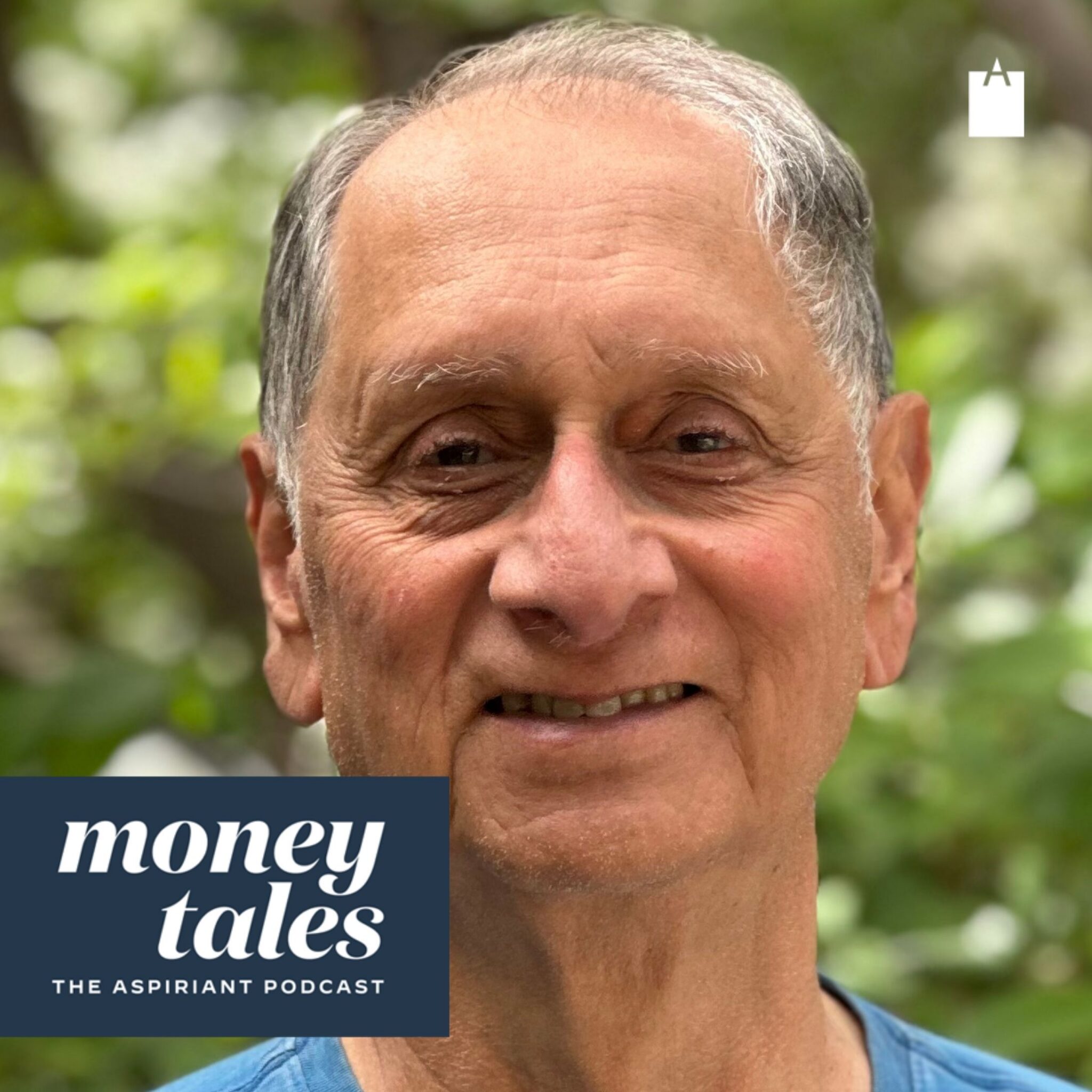
Cammie Doder (00:04):
Welcome to Money Tales, where Money gets personal. I’m Cammie Doer
Sandi Bragar (00:09):
And I’m Sandi Bragar.
Cammie Doder (00:11):
Money means very different things depending on where you start and where life takes you. In this episode, Uday Wagle, a former director at the International Finance Corporation within the World Bank Group, shares how his perspectives on money were shaped across continents, cultures, and decades from growing up in India where money was not discussed to building a life in the United States with a young family and initially very little financial cushion. Uday’s story is thoughtful, grounded, and full of perspective.
Sandi Bragar (00:45):
Here are three money conversations. This episode will help you navigate first, how cultural norm shape what you do and do not say about money. Uday reflects on growing up in India where money was rarely discussed, and how that silence influenced his early understanding of saving and spending. Second, what it really feels like to start over financially. From early sticker shock to juggling a mortgage, family expenses and occasional overdrafts, Uday shares the reality of rebuilding stability from scratch. And third, why sharing financial responsibility matters more than you think. After seeing friends struggle, when one partner handled everything, Uday looks at his own marriage and the importance of making money visible, shared, and understood. Now it’s our pleasure to bring you UD Dies, money Tales.
Cammie Doder (01:40):
Welcome, Uday Wagle to the Money Tales podcast. It’s really great to have you with us today.
Uday Wagle (01:46):
Thank you. It’s wonderful to be here. I’m looking forward to the adventure.
Cammie Doder (01:51):
Before we get to your story, I wanted to share a really fun money raiser. I read about a grandson of Pablo Picasso donated one of Picasso’s paintings for Alzheimer’s research, and I read about this in a daily publication. I get called The Nice News, which I really love.
Sandi Bragar (02:13):
Oh, I love that.
Cammie Doder (02:14):
I need it. What
Sandi Bragar (02:14):
A great way to start the day.
Cammie Doder (02:16):
Indeed. They wrote about a bit of a gamble. So the Picasso is worth a million dollars, and Christie’s ran opportunity for you to buy a ticket that was a hundred Euros, which is equivalent to about 117 US dollars for the chance of possibly winning the Picasso. And they raised $13 million through this, which is really wonderful. They actually capped it, which I thought was beautiful. They didn’t just keep selling tickets. There was a limited number of tickets and someone won a Picasso worth a million dollars. This person spent $117, and I just think, what a beautiful story. What a great fundraising idea. It got people excited and it’s all for a great cause around Alzheimer’s research.
Sandi Bragar (03:04):
So the 13 million raised was based on all of these individual raffle ticket sales, basically.
Cammie Doder (03:10):
Isn’t that amazing, Sandi?
Sandi Bragar (03:12):
So low cost of entry, wide reach, and they raised money for a great cause. That’s incredible.
Cammie Doder (03:19):
What a great way to do it too, right? It’s fun, it’s playful. You just find yourself cheering everybody on through this process and a win-win all around.
Sandi Bragar (03:31):
Yes. Oh, I wish I had something of great value to be able to use to raise money in that way. That’s really exciting. I love those innovative ideas. There’s so many fun things you can do within philanthropy, and that’s particularly exciting. I love the crowdsourcing effect of it.
Cammie Doder (03:47):
Crowdsourcing. Good word for that. I just love it, and I love this nice news daily publication that I often start my day with a bit of fun story versus some of this other stuff that we’re hearing that’s much heavier. Well, it’s my pleasure to bring you into the conversation. Would you briefly introduce yourself, and we’d love to know a couple pivotal moments that have taken place in your life that really impacted who you are.
Uday Wagle (04:16):
Okay. Well, thank you again for having me. Oday Wagle, born in India a hundred years ago. It seems like spent the first 30 of years of my life in India, working in India. A couple of different jobs. Moved to the United States when I was 30, and spent the next 30 years of my life working for the World Bank Group in their private sector around the International Finance Corporation, hoping to spend the next 30 doing fun things with grandchildren and all kinds of other fun stuff. When I think about it, a lot of my pivotal moments happened because of other people, not because of what I planned, and I think in a way that’s what life is. It’s what happens when you make plans and other people step in and influence things
Cammie Doder (05:12):
For sure.
Uday Wagle (05:13):
So yeah, my move to the US was kind of like that. I had planned to apply to the World Bank Group after I finished business school in India, but I got scared when I saw all the kind of people who had applied and worked in India for some time until my wife said, Hey, you better apply, or you’ll be too old. So there was a change over there.
Cammie Doder (05:40):
Well, that’s interesting. I’d love to hear more about what a big change and what an exciting career before we do. Tell us about growing up in India and when you were young, how did you connect with money and how did you learn about it as you were growing up?
Uday Wagle (05:57):
Very interesting question because in India, the time I grew up, nobody talked about money. It was not a conversation you had.
Cammie Doder (06:07):
Why did no one talk about money?
Uday Wagle (06:09):
I really don’t know why. There wasn’t a lot of it around. There were very few wealthy people who kept to themselves, did their philanthropy, were seen wherever they were. They ran big businesses, whatever. But you didn’t have the, let me use the word capitalist, the capitalist entrepreneurial lifestyle in the fifties and sixties. When I was growing up, I came from a middle, middle class family. My dad worked in a salary job for the central government. My mother was at home taking care of my sister and me. My dad paid the school fees, and I trotted off every school quite happily. It’s only when I went to boarding school for the last four years of my schooling that I realized, huh, I have to care about money. Because there was an allowance. It got a weekly allowance. It wasn’t cash. It was an account we signed up for at the shop where you got snacks or whatevers, and you had to watch what you signed up for because at the end of the week, a little letter went off to my dad, and at the end of the month, you had to pay the bill. So that’s when I first started thinking about money. I was all of 11 years old.
Sandi Bragar (07:33):
Wow. That’s actually a great lesson. And I’m curious, did your father ever question what you were spending money on, or what was your emotional attachment to that process?
Uday Wagle (07:44):
Funnily enough, my dad was one of the most laid back people in the world. He was always helping others. He was very quiet, didn’t say much, but when he said something, it mattered. So no, he never questioned what I said. I mean, I remember growing up, I learned to say if I wanted something, if I wanted a bicycle, I’d say, dad, can I have a helicopter? He’d say, okay, no. Can I have a bicycle instead?
Cammie Doder (08:16):
You learned to negotiate right? At an early age.
Uday Wagle (08:20):
Yeah. He was an engineer. He fixed things. We didn’t buy a new car, but he bought a used car. He tinkered around with it. I learned to tinker around it with him. We never had conversations about money, but I think the value of money was, and the value of saving was instilled at a fairly early age. I think in India at that time, fifties, sixties, savings was a habit. It was in the genes. Everybody automatically saved. You didn’t spend, there wasn’t much to spend, and there wasn’t much to spend on.
Sandi Bragar (08:57):
So you had those great early opportunities to learn about making money decisions within your monthly stipend in spending. You knew from the society around you and the family around you, that savings really important. You move into adulthood, your twenties, it sounds like you were still in India growing a family, getting married. Did you have children at the
Uday Wagle (09:22):
Time? Yes. I got married at 24.
Sandi Bragar (09:24):
And so how are you thinking about money as a parent looking to get a job with the World Bank? That’s a really impressive move.
Uday Wagle (09:35):
So like I said, I went to business school in Bombay. Now Bombay one looks around, what can I do? What can I do? I’d done an engineering degree before that. So I really wanted to get into engineering, to manufacturing. There was no tech at that time, and we had computers, but they were used for low-key applications, corporate applications. So looking around, I saw this job advertised the Young Professional program at the World Bank Group, and I said, Hey, let, I’m not yet 30. Let’s do that. And then I looked at the material and there were PhDs and economists and guys who’d studied at Yale and all that stuff, and I said, well, won’t happen. Won’t happen. So I didn’t, and I was not yet married at the time, but we were an item, if that’s the right word to use. Weren’t engaged yet. But yeah, when I finished business school, we were serious. So I started working. I first worked in manufacturing, manufacturing pressure. So if you ever need lessons in how to use a pressure, Coco, I’d be happy to teach you.
Cammie Doder (10:45):
You’re handy. This is good.
Uday Wagle (10:47):
I taught the lady who became my mother-in-law, how to use a pressure cooker. She never looked back.
Sandi Bragar (10:55):
Okay, take you up on the offer then.
Uday Wagle (10:56):
I
Cammie Doder (10:57):
Kind of too,
Uday Wagle (10:57):
Sandi,
Cammie Doder (10:58):
I’ve never used one.
Uday Wagle (10:59):
You’ve never used a pressure cooker? Well, different conversation probably. So worked in manufacturing, then moved to a large steel company, moved into finance, moved into the money side of things, budgeting, capital, budgeting and stuff. Worked more with computers. And then one day my wife says, I was looking for a, I’d been in my job for five years. I was looking for a change. Didn’t see much opportunities. I mean, saw opportunities, but nothing really exciting. And my wife says, Hey, remember that thing You’d looked at young professional program. Well, look, you’re going to be 30 very soon, so you’d better apply now if you want to. So I said, nothing ventured nothing, gained nothing to lose. So applied, got a call for an interview. We lived in Bombay, got a call for an interview to Delhi. They said, we’ll put you up in this five star hotel.
(11:54):
I never stayed in a five star. We couldn’t afford five star hotels. So went to Delhi, airfare paid, stayed in a five star hotel interview for two days, three days came back. So how did it go? I said, yeah, okay. There was one interesting guy I met, but I dunno. Let’s see. My wife worked for an airline at the time, so she got free tickets. Free tickets, very important, very useful. Both of us were working. She was working in a hotel in a secretarial job, and I was working in a steel company. We weren’t making big bucks, but we made enough. We were living with her mother, rather small apartment, two room apartment, one room of which had been split into a bedroom and a kitchen so that we could have a bedroom. We’d saved up a little bit of money, and my dad, who’d been to the United States on a training program, had saved a couple of hundred dollars from his trip. We decided to go for a holiday to London, and we go on this holiday to London, and when we come back, we lived in an apartment building. The whole building is a buzz. You have a telegram. You have a telegram. Ooh. And I opened up the telegram, and it’s an offer from the World Bank Group.
Cammie Doder (13:18):
Wow, that’s incredible. And sorry, where would you be based in with this offer?
Uday Wagle (13:24):
Washington dc. So by that time he had his son. He was two and a half, and I had to join within a specific period of time, because once you cross 30 plus whatever, I forget what the details are now, but there was a time limit. It was like four or five months I had to decide and move.
Sandi Bragar (13:44):
It’s a big change in a short period of time.
Cammie Doder (13:46):
That’s incredible.
Uday Wagle (13:48):
Big change. I mean, we loved our life in India. We had a lot of friends. We couldn’t spend on everything we wanted to. We were comfortable. We didn’t have much money to spend. We didn’t have much money to anchor us to India. But at that time, there wasn’t this huge magnet of, oh, I want to go to the US to make a lot of money. Life in India was good. So the money to be made in the US was not a huge attraction at that time.
Sandi Bragar (14:21):
But how did your life change when you got here? From a money perspective, I imagine the societal values around money were different. I imagine the cost of living was a lot different and that your compensation was a lot different.
Uday Wagle (14:37):
Two big changes. One was from a social point of view and ones from a money point of view, from a social point of view. I came a couple of months earlier, but then we rented a place, an apartment, and my wife and son came, and my mother-in-law came too, because she was by herself. So we convinced her to come along. My mother-in-law and my wife were miserable because there was nobody around, no friends, nobody to see. My wife befriended the Avon lady because she would come in and she would buy things from a one lady, just so she have somebody to talk to. But then she learned how to drive and got around. Money wise. The biggest change was for my mother-in-law. She used to convert everything. She said, oh my God, this is so expensive. Oh my God, this is so expensive. So I had to literally sit and tell her, look, mom, think of it as 50 cents equal to one rupe in roughly purchasing power terms.
(15:38):
That’s what it in my mind worked out at in terms of daily living, not in the big things. I said, think of it a cup of tea. If a cup of tea costs you two rupees in India, it costs you $1 over here. It’s not that much. And that’s gradually how her mindset changed. My wife got used to things gradually. We were living from paycheck to paycheck because we had to pay the rent education for my son as soon as he became school. Going age, transportation, I mean, the cost of living is high groceries. It was sticker shock from a different point of view. But we managed, we put aside a little bit. Like I said, savings was in the jeans. We came here in 1980. Our daughter was born a year and a half, almost two years later, saw a second child, and we figured out that we could afford to buy a small house. So I remember a friend of mine who come to the US a few years, well before I did, he said his brother-in-law gave him his advice. He said, if you live in America and you’re not in debt, you’re not living.
Sandi Bragar (16:56):
Wow.
Cammie Doder (16:57):
Wow.
Sandi Bragar (16:57):
And
Uday Wagle (16:57):
This was, remember early eighties, you have to spend money in America.
Sandi Bragar (17:04):
Interest rates were really high still then, right? In the early eighties,
Uday Wagle (17:07):
They were. Yeah. Yeah. I remember my first mortgage was something like 12% or something like that. But we figured we, we had a friend who gave us a second mortgage. We knew we had buffer with that friend’s second mortgage loan.
Sandi Bragar (17:23):
So it was just a private loan from a
Uday Wagle (17:25):
Friend, A private loan, yes. But it was a second mortgage, meaning it was secured on the house. The credit union from work was a friendly credit union. So we, and my wife used to dread what she called the pink slips, because if we were overdrawn on our checking account, we used to get a little slip in the mail
Cammie Doder (17:48):
Telling
Uday Wagle (17:49):
Us that we were overdrawn. We had those for quite some time. One of the things we were not doing was spending on credit cards. We were not spending long term. So what we had saved was locked into the house. And so what we were doing was borrowing from next month’s paycheck to live this month, what an overdraft was. As soon as the paycheck came, boom, the overdraft was gone, and it was in the second half of the month that you got a pink slip saying You’re overdrawn. So that was a big adjustment.
Cammie Doder (18:27):
I bet. Uday, I’m really eager to hear more about your experience at the World Bank. Describe what you did. I’m sure you did many things, but tell us a little bit more about that, and how did that impact you and your relationship with money through that 30 years at the World Bank?
Uday Wagle (18:48):
Okay. First, what I did when I started the World Bank, I started working on East Africa. I worked at the International Finance Corporation, which is the private sector arm of the World Bank Group. So it’s a whole separate set of staff was at that time may have mingled now, and the focus of the National Finance Corporation, the IFC was to support the private sector in developing countries, and it did this by making loans, foreign exchange loans, by taking equity and by providing technical assistance. So working in East Africa, we would fund private sector projects. We would fund companies. So working in East Africa, I worked on a project to grow. Do you know what sisal is? I
Sandi Bragar (19:37):
Don’t think I do. It’s a
Uday Wagle (19:38):
Fiber made from the agave plant, and you weave it into these colorful handbags, fiber handbags. They’re very popular. I did a hotel, I did a plywood plant. I did the energy conversion of a cement plant.
Cammie Doder (19:54):
You’re acting like a venture capitalist in that capacity
Uday Wagle (19:57):
As a project financier here. So sometimes venture capitalists, the majority of our finance was loans. Part of our finance was equity, was share capital. So all kinds of little projects all over East Africa. So to do that, we’d visit the projects. So I was on the financial side, a technical colleague, an engineer. The two of us would go in there. We’d have a feasibility study in advance, which we’d have studied. We’d go in there to the site, talk to the people who were planning to set it up, talk to their potential customers, look around the market, talk to government to see what government regulations were like, and make an assessment of is this going to work? What are the risks? And then make a recommendation toward our investment committee to say, yes, we should make the loan, or how much, what terms, et cetera. And then once we’d make the loan, then we’d have to supervise it. So every six months go out there and see what’s going on. So we met all kinds of people. You met people who were trying to pull a fast one, and people were really solid. And we looked for the people who worried about their companies, like they worried about their babies, because if you worry about your baby 25 hours a day, you will worry whether it works. So that was a great experience. What
Cammie Doder (21:24):
An amazing
Uday Wagle (21:24):
Experience.
(21:25):
Yeah, talking to different people and what did it teach me about money? It is very important, but it is not everything. So very thankful that we were where we were. We were getting a regular salary that was every two weeks. It came in predictable, gave stability to life. But we were talking to people, talking to workers who were subject to huge risks, subject to if they were growing stuff, they’re subject to climate risk. They’re subject to market. If suddenly people decide not to go to a particular hotel because something happens in that city, what happens to all the people who work there? They suddenly don’t have jobs. Besides which East Africa, again, at that time was a quieter, softer place, if you will. And the lifestyle was much more communal, much more society oriented, and everybody took care of everybody. Yes, there were people who were gung go to get ahead, but there were a lot of people who took care of others. And so that’s where you picked up, yes, it’s important to have money, but if I don’t have it today, my cousin or my friend will help out. That’s a great realization. I think it’s great realization. It’s a great value to take through life. So worked on East Africa, then I moved to work on Latin America, then moved to, we lived in Indonesia for three years, then came back, worked on Southern Africa, and then moved on to different things besides investments in the World Bank. So it’s fun. Yeah. Yeah.
Sandi Bragar (23:30):
I’m curious, as we get to the end of our conversation here, now that you’ve moved into the third 30 year chapter that you were talking about before, focusing really on family and grandchildren and friends, how are you thinking about money today and what are your reflective thoughts that you haven’t shared?
Uday Wagle (23:54):
So to share a story, a very good friend of ours who was significantly younger than her husband, her husband passed away about a year ago of cancer and relatively suddenly, and seeing the torture trouble she had to go through because he took care of the finances in the family, he took care of all the money things. He paid the bills, he did the bank accounts, he had all the passwords.
Sandi Bragar (24:30):
That’s common for a lot of couples.
Uday Wagle (24:32):
Yeah, she did a lot of her own stuff. She’s fiercely independent, but she had to find out the hard way about a lot of things that she didn’t know about.
Sandi Bragar (24:44):
He was taking the responsibility, but they weren’t connecting, and he wasn’t keeping her in the loop.
Uday Wagle (24:49):
He was taking all the responsibility. So in our house, I think it is shared, but reflecting on this experience, it’s not shared enough. Now, we do have thanks to an estate plan that we made a few years ago, and thanks to the lawyer who sat down and castigated us for not having good records, we have, I think, good financial records. It’s all in one place, so either my wife or my kids or trustee or whoever can go and look up stuff quite easily. It’s all organized. So that kind of torture won’t be there. But I think the everyday stuff of how do I pay this bill? How do I access this account? How do I do this? How do I do that? That responsibility, I think, needs to be shared
Cammie Doder (25:40):
Responsibilities, and the communication is super key, even if you keep the responsibility, if the other person is just really involved through conversation.
Uday Wagle (25:50):
Right. But funnily enough, I think shared responsibility is important because it’s so funny. The steps that you have to go through sometimes on some of these apps, as we discovered, is sometimes non-intuitive and different. People’s intuition works in different ways. My wife’s brain is wired totally differently from mine. We do the New York Times puzzles regularly, and she will see some things that I’ve been struggling over, and she’ll see things, of course, boom. Her pattern recognition is very different from mine. So communication, yes, but doing it step by step, she needs to write the steps down. That is
Cammie Doder (26:33):
Priceless. Yes.
Uday Wagle (26:35):
If she doesn’t write it down, she doesn’t get it.
Cammie Doder (26:37):
Learn it, do it, teach it. Isn’t that something along those lines?
Uday Wagle (26:40):
Yeah. Teach someone how to fish, et cetera, et cetera, whatever. Yeah,
Sandi Bragar (26:45):
I love that. And we oftentimes talk about the beauty of financial date nights and setting aside time in a fun way to go through just what you’re talking about. That’s
Uday Wagle (26:58):
A term I had not heard financial date nights
Sandi Bragar (27:01):
Put together some romance with some money conversation, pull out the apps, show each other how you’re doing things. Sandi,
Uday Wagle (27:08):
We’ve been married a little over 52 years.
Sandi Bragar (27:13):
I think you’d enjoy it. I bet you would. Yeah,
Uday Wagle (27:15):
Sure. Date nights. Yeah, absolutely. Absolutely.
Sandi Bragar (27:19):
Tell us, what’s your next money conversation going to be and who’s it going to be with?
Uday Wagle (27:23):
Well, like I said, probably with my wife so that we have more shared responsibilities, and definitely with all my older men friends. So we have beer once a month, us guys get together to drink beer and discuss, solve the problems of the world. I’m going to bring this up saying, look, guys, if you do all the money stuff in the house, make sure your wife knows how to do it too,
Cammie Doder (27:51):
Dave, that is beautiful.
Uday Wagle (27:52):
So that’s going to happen and
Cammie Doder (27:54):
You’re paying it forward. I really appreciate that, and what a treat. Congratulations and thank you so much for sharing your stories and the wisdom along the way on Money Tales.
Uday Wagle (28:08):
Thank you. I’ve enjoyed it. And the half hour past like crazy.
Sandi Bragar (28:22):
Thanks again, Uday Wagle for joining us on Money Tales.
Cammie Doder (28:26):
So much of his story resonated, but gosh, the story that really I appreciated him bringing forward was about his friend lost her husband, and being basically kind of overwhelmed with the financial aspect of running a life, a household. It’s so important. I think about my mom and my dad’s relationship. My dad did everything. My mom wasn’t exposed. Both could handle it, and I think it was a little bit of a division of labor. But I like that Uday said, don’t. I sort of said, yeah, you should at least be talking about it. I like that he emphasized No, both parties need to do to really understand, and it’s an important message,
Sandi Bragar (29:10):
Very important message, very important topic. When we’re working with clients, sometimes the couple has hired us just so we can be that team to help them. If there is an unexpected
(29:27):
Life ending or life changing event, they just like having a trusted third party in place to be able to help guide them and move things along. But at the end of the day, a financial advisor can’t do everything. That’s right. So working as a team, and this applies to couples of any age, because things can happen at any time, and it’s a great way to be prepared. One last thing I wanted to bring up from a technical standpoint that came up in the conversation with Uday is the idea of a private loan. I thought that was interesting. When you would have a need to borrow money. You don’t have to get it from a bank, you can borrow it from other individuals, and you can certainly borrow it from other individuals and use that money to buy a home. Oftentimes, and it sounds like this was the case with the loan Uday and his wife got from their friend, that loan can be recorded as a lien against the home so that the home is collateral for the private loan, just like it would be for a mortgage with a bank that allows the borrower to continue within certain rules.
(30:38):
So it gets a little more complex than this, but there is the ability to deduct interest, mortgage interest against a private loan if it is set up properly.
Cammie Doder (30:48):
Interesting. Just
Sandi Bragar (30:49):
A little technical hint and insight for people out there. Thanks for saying that was helpful.
Cammie Doder (30:54):
Yeah, it was interesting. I wasn’t familiar with that, so thanks for understanding
Sandi Bragar (30:58):
That. Yeah. We use this technique. Oftentimes when parents want to help their children buy a home and want to be able to lend money to the children, they can do it under oftentimes more favorable rates. The government does require a minimum interest rate called the applicable federal rate, or a FR rate, which can be much more attractive than a big clone rate. Something we use all the time here at experience.
Cammie Doder (31:22):
Really important. Well, it was a treat, and please, if you enjoyed this episode, we invite you to share it with a friend who also might benefit. Learn from Uday’s experience, and thanks so much. We’ll see you next time.
(31:42):
Thanks for listening to the Money Tales podcast. If you’ve enjoyed this episode, share it with someone you think would benefit from listening and leave us a review on your favorite podcasting platform. Your ratings and reviews help more people find our podcast. If you’re inspired to gain clarity and peace of mind about financial matters, don’t hesitate to reach out to our team at Experian. Go to Aspiriant.com/start a dialogue, or you can email Sandi and me at podcasts@aspiriant.com. See you next time.
How do cultural beliefs, immigration and life experience shape our relationship with money? In this episode of Money Tales, Uday Wagle, a former director at the International Finance Corporation within the World Bank Group, shares his personal journey from India to the United States and the financial lessons he learned along the way.
Uday discusses how his perspectives on money were shaped across continents, cultures and decades. From growing up in India where money wasn’t discussed, to building a life in the United States with a young family and initially very little financial cushion, Uday’s story is thoughtful, grounded and full of perspective.
Uday is a seasoned executive, with 37 years in the corporate world, in diverse industries and roles. Most of his career has been in investing in the emerging markets private sector. In addition to his skills and experience in development finance, he has the natural skills of a coach and teacher. His empathetic nature has enabled him to help many individuals at difficult points in their lives, to think through and solve thorny problems and take difficult decisions.
Follow Money Tales on Spotify, Apple Podcasts or YouTube Music for more real stories that inspire thoughtful, intentional decisions about money.

with Neda Patra
with Anne Lester

with Lindsay Jurist-Rosner
with Margaret Andrews
with Bobbie LaPorte
with Uday Wagle
with Caroline Gaynor
with Dr. Charles Eckhart
with Jane Bond
with Denise Dunning
with Sandi Bragar and Cammie Doder

with Uma Viswanathan and Johann Berlin
 Talk to us