
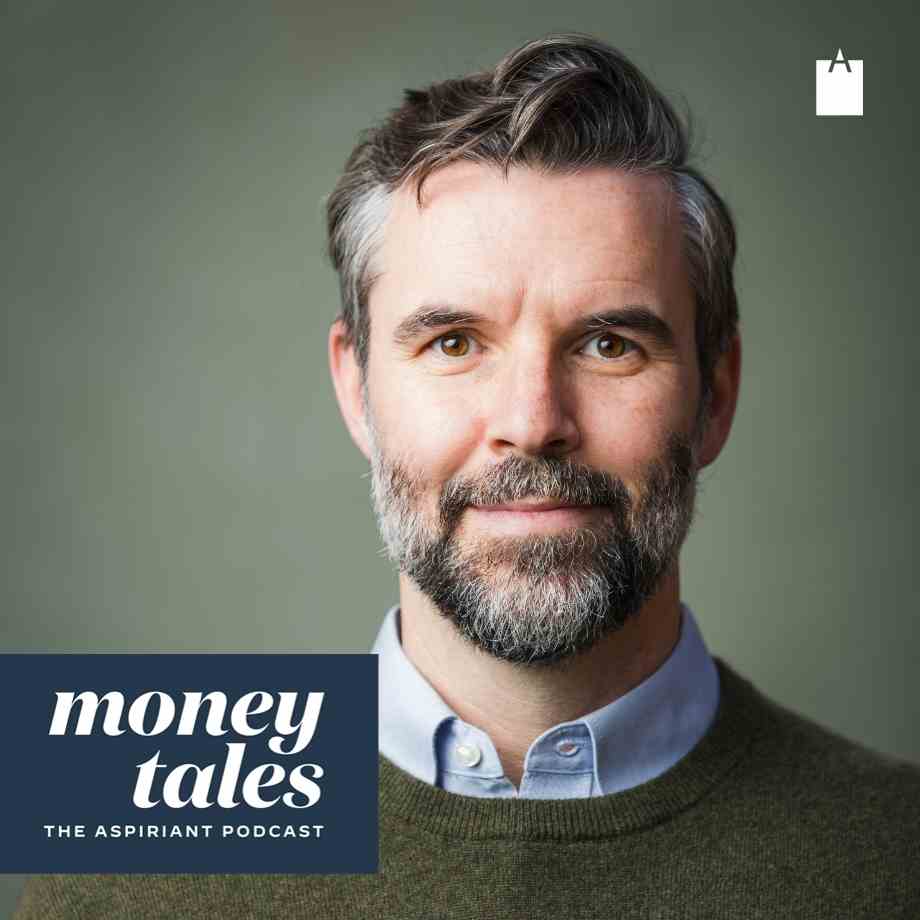
Cammie Doder (00:04):
Welcome to Money Tales, where Money Gets Personal. I’m Cammie Doder
Sandi Bragar (00:09):
And I’m Sandy Bragar.
Cammie Doder (00:11):
He thought he might’ve found the smartest investment of his life as a kid in baseball cards. In this episode, Dr. Charles Eckhart, founder and managing partner of Caty Group reflects on how that early optimism about money evolved into a career helping ultra high net worth families navigate complex decisions together along the way, he shares what it really means to balance, ambition, purpose, and responsibility across generations.
Sandi Bragar (00:40):
Here are three many conversations. This episode will help you navigate first, how family legacy shapes financial identity. Growing up inside a multi-generational story about ambition, earning, and purpose can influence how you see your role even when you choose a different path. Second, building a business when financial security is on the line. Charles shares how leaving a stable career to start something new brings real pressure, especially when a partner has a very different relationship with risk. And third, navigating financial inequality and relationships. When one partner brings significant wealth into a relationship, the emotional and practical decisions around spending ownership and identity get complicated fast. Now it’s our pleasure to bring you Charles Eckhart’s Money Tails. Dr. Charles Eckhart, welcome to the Money Tales podcast.
Charles Eckhart (01:36):
Pleased to be with you both. Thank you so much for having me.
Sandi Bragar (01:38):
We’re so glad that you’re here and we’re so glad to have a money conversation with you. And before we get to your money tales, I want to share how difficult it can be in the world to protect your money, and I’m not talking about protecting it from market risk or liability. I’m talking about just day-to-day financial transactions and how to protect yourself because we’ve had a listener reach out to us and share an experience that I wanted to share with listeners because she was astounded that this was happening. She was on a popular website buying something like she always does, and when she pushed submit to make this purchase, she got a message stating that the transaction could not go through unless she entered her Apple account password. She was then told $250 would show up as a temporary charge, which Apple required to put the transaction through.
(02:38):
She shared that she was reluctant but not reluctant enough because she uses this website all the time. She’s done many transactions successfully on there before, and she was in a time crunch, so she thought she was in conversation through these notices with a representative from the company, but she had a little bit of concern, but she went forward anyway. She saw the charges that she told were going to be temporary on her account. She then checked with Apple. She checked in with the vendor. She checked in with her bank, and the answer she got from all of them was that once she provided her Apple password, there was nothing further they could do.
Cammie Doder (03:17):
Whoa.
Sandi Bragar (03:18):
They knew all of these parties knew about the ability for this hack to occur and interfere, but there was no communication with her about it. So she asked that we share her story because she wanted to help protect listeners by this astounding event. What
Charles Eckhart (03:35):
A nightmare.
Sandi Bragar (03:35):
Now, luckily, she had that skepticism and she was checking, and I think all she was out was $250, but think through all the transactions we do every day with our digital wallets, with companies we know and trust, relying on banks we know and trust, and then things like this happen because fraudsters are really smart, smart. They’re onto things.
Cammie Doder (03:57):
Sandy, if we could roll back time, what are the flags that we should look for in something like that? I’m not sure even hearing that story, I’m ordering and it’s saying, oh, there’s an issue, and so just enter this. I keep getting told that I need to enter a password about my Google account and I don’t know why nothing’s being blocked, so I just don’t,
Sandi Bragar (04:20):
I think asking for the Apple account password was the big flag.
Cammie Doder (04:24):
So password in particular? Yeah,
Sandi Bragar (04:26):
Because she has presumably Apple Pay set up, and so there’s a financial tie in there. Certainly if someone’s asking for a password and you enter it, depending upon the situation, they could be accessing your personal private information, which would not be great, but in this case, from a financial perspective, I think that was the big flag. And so I think stopping getting out of the transaction, trying to go back in to see if you can,
Cammie Doder (04:53):
Oh, that’s a good one.
Sandi Bragar (04:54):
Sort of rebuy
Cammie Doder (04:55):
Recreate it or even,
Sandi Bragar (04:56):
Yeah. Does that happen again? And then if it continues to persist, I think reaching out to the representative at the company or even calling the bank would be a good idea beforehand. I just think vigilance goes so far. It takes more time. It would slow down your transaction depending upon what you’re buying. You might miss the opportunity to buy it if it’s some sort of timely purchase, like a concert ticket or a sporting event, something like that. But in my experience, taking the time on the front end to be vigilant saves a lot of time and energy on the backend if fraud does occur and you’re trying to clean it up later.
Cammie Doder (05:35):
All right. It’s almost that awareness. You said the listener was in a time crunch. I got to remember that pause. It’s not that important. Even though your list of things, it’s like, oh, I just got to take care of this and move on,
Sandi Bragar (05:48):
And she kind of had that sense of like, huh, this feels out of the ordinary.
Cammie Doder (05:53):
Yes. Trust your gut.
Sandi Bragar (05:55):
I think so. And so I really appreciate her for reaching out and wanting to share this message with other people. I don’t want to share the name of the company because I’m not trying to point fingers at anybody, any companies or banks or Apple or anyone else, but just be vigilant out there.
Cammie Doder (06:11):
That’s such a great one. Well, I appreciate it as well. It’s my pleasure to turn our conversation to you. Charles, would you briefly introduce yourself and share a couple pivotal moments that really influenced who you are today?
Charles Eckhart (06:25):
Absolutely. Hi everybody. First off, I’d like to say that on the podcast they did not ask me for my Apple password or for any kind of deposit for me to participate, which was a relief. I may have fallen for it because Cam and Sandy, I would’ve trusted you. My name is Charles Eckhart. I’m the founder and managing partner of Caty Group. Caty Group is an ultra high net worth family governance and consulting firm. We work with generational families to help them navigate transitions, prepare for the future, and learn how to make decisions together or elevate their capacity to make high stakes decisions together as families. I’m pleased to join you all and have been a longtime listener to the podcast, and so it’s an honor to join you and have a conversation.
Cammie Doder (07:09):
Great to have you, Charles, any pivotal moments in life that really impacted you?
Charles Eckhart (07:14):
I’d say this because it certainly informs my work and also may speak to some of the things that your listeners have experienced as well. I grew up in a ambitious, enterprising family. I had a seven generations ago, the first Charles Eckhart started Carriage Company, which became a car company called the Auburn Motorcar, and I’m somewhere in, I’m seven generations later in that lineage. I grew up as a result with my paternal side, then very ambitious. My grandfather then was a executive in the oil industry. My dad was a telecom executive, and I grew up with fairly fast paced and ambitious people around on that side of the family and on the other side of the family, also hardworking and more modest. My mother is a painter. My grandmother on that side was a school teacher. She was a high school English teacher and her husband was a draftsman in Midland, Texas.
(08:09):
And so I grew up with, I’d say, and who doesn’t, but I’d say really complex messages around money, around family mythology, around purpose, earning, ambition, contribution to the world. And I grew up very much with a family that valued wealth accumulation but not consumptive spending. And so there was a lot of messaging around the importance no matter if there’s family money or not, the importance of earning because that is, I think, for the Eckhart’s, just a fundamental part of being in the world and that it feels better whether or not it feels better to have significant role in our own lives. And whether that is measured by earning capacity or it is measured by philanthropic contribution or deep involvement in one’s family and parenting, that purposeful living and contribution vocationally and inside the family is deeply important. So these things influenced me very much. Yeah,
Cammie Doder (09:19):
Beautiful messages. Charles,
Sandi Bragar (09:21):
Are you the seventh?
Charles Eckhart (09:23):
I’m not. And I’ll tell you why. My uncle, my dad’s brother is the sixth, and my understanding is they did not think that they would be able to have children. And so my dad, the younger brother then said, Hey, why don’t we use the Charles name? We can continue it on. And then later on some years later, they were able to have a child, and that’s my cousin Neil. And so I in a way stole the name, but I didn’t do it on purpose, so I’m not the seven.
Sandi Bragar (09:55):
Does having a family name, even if it wasn’t in a direct, I mean it’s a direct lineage, but not in the traditional sense, did that put pressure on you from a money perspective given these messages you were growing up with?
Charles Eckhart (10:11):
It’s interesting. My family did a great job in that name and the Eckhart family history being something to be proud of, but not something that was high pressure. There was a lot of other pressure in the family that I think was an extension of that side of the family’s dedication to hard work. So there were high expectations in terms of career choice and contribution over time, but it wasn’t so much linked to the name. Also, a lot of people grow up in legacies where the founders were really, really intense personalities, and I didn’t know the first Charles Eckhart, he was, I think born in the 1850s or 1840s. It was so long ago that I didn’t know anyone past my grandfather and my grandfather, he was a Marine. He served extensively. He was a pilot in the Marine Corps, so I think earlier in his life he had quite an edge, but to me, he was a sweet, sweet and dear tender grandfather who treated me very kindly and my uncle, the other Charles as well, that whole side of the family, my dad as well. There was a real sweetness to it, so I was fortunate that it didn’t come with a lot of barbs.
Cammie Doder (11:26):
I love it. So Charles, you’re learning to work really hard to be having purpose. Let’s talk about how you started learning about money. Were there money that you implied? There were money messages, but how did you really connect and start learning about money?
Charles Eckhart (11:45):
Well, I think I wasn’t naturally great at it.
Cammie Doder (11:48):
Is
Sandi Bragar (11:48):
Anyone,
Cammie Doder (11:50):
How do we measure that? I’m curious. Is that as a saver or how
Charles Eckhart (11:56):
Wasn’t a natural saver? I’d say I’m kind of a growth investor by temperament. I have an optimistic view, not of all things, but I’m interested in things I can be optimistic about. When we work with families, we work with families by which we can have some hope that the future looks good and that we may be able to impact it as well. And it’s very much how I’ve seen my career, and I think as an 8-year-old, I then was not a person who was saving. I was a person who was buying baseball cards, very convinced that I had purchased a baseball card that would be worth much more in the future than now.
Cammie Doder (12:33):
I love
Charles Eckhart (12:33):
Growth
Sandi Bragar (12:34):
Investing. Okay. I think you missed the window.
Charles Eckhart (12:39):
Yeah, yeah, exactly. What’s funny is in the return of the baseball card phenomenon, I’m in my early forties still listeners, which is likely obvious by the amount of white hair that is all on my face and head. I’m 25 you guys, so I’m of this generation then where baseball carts were popular when I was a kid, they’ve really come back around and 8-year-old Charles would be furious with me that I sold all my baseball cards or probably gave them to the neighbors when I was 18 or 20 or something like that. I had a thesis that this is how life was all going to work out and I would’ve made it on my own. I think the high achieving family members caused me to pull back and I went to kind of a wild hippie college and I had a very buttoned up corporate father in the era of telecom being the tech of the day.
(13:35):
I turned away from a lot of the, I think, family culture around performance and vocation. I went and went to a wild college where we spent almost more time outside than I did in and then became a clinical psychologist. And so that is a professional career and one that can earn well, but my focus was not on earning. It was then into my middle career that I transitioned into working in family governance, in service of wealth management. I think maybe for many people as I got older, my risk appetite came down the importance of having a much larger emergency savings account than I ever would’ve imagined that went up. Having as much money as possible to be investing at the end of each month so that I can take care of future emergencies and future opportunities that I wouldn’t have predicted has settled in a lot more in my middle age. But I’d say from early on as a spender, I like to spend, I like goodies. That’s always been an uphill battle.
Sandi Bragar (14:46):
Charles, I’m curious about what you just described going to college, focusing on an area of study and a career that was divergent from what your ancestors before you were doing. What did that feel like at the time, especially as you were thinking about your money future or maybe you weren’t even thinking about your money future then what did it feel like?
Charles Eckhart (15:13):
I did feel very alien to say to my father was a son of a combat marine with really extensive combat time. They were tough men. My dad was a division one swimmer and to say, I’m going to go be a therapist. I was certainly the first in the family to say such a thing, and my parents to give them credit, I think they did not understand what in the world that I was doing. I didn’t have physicians in the family. This whole sort of extended graduate school thing was not a thing in the Eckhart family. And so it felt alien and I think it was an important step of individuation for me in my twenties to say, I admire my family in a lot of ways and I’m different. I’m me. I don’t belong in a corporate operations role. I am interested in meaning and trying to help others, and I’m enormously interested in human experience and the way we make sense of the world around us and how our personalities and character shape through essential experiences early in life and the world we grow up in and the temperament we have and the subjective viewpoint we have of how we see ourselves and others.
(16:33):
That’s the stuff I couldn’t get past. The idea that I could go be helpful and work in that kind of way was something that, I mean, I think it was the only thing that made sense to me, and so I had to do it. I think it was one of those things I just had to go do.
Cammie Doder (16:50):
I think that’s great. And then given your background in the seventh generation family and the history and the lore that I’m sure that brings, describe then choosing to become a wealth consultant, and I have to think your background really influenced that, but describe that journey and what you were hoping to get out of it.
Charles Eckhart (17:13):
Well, given my own background, I had an eye on how nuanced family mythology and stories and money messaging and ambition, expectation, responsibility, legacy. You might have a sense for the weight of some of that. And my clinical practice bridged a gap between, I had some professionals with professional careers, I had some sliding scale patients for which money was really a challenge, and then I had a lot of wealthy people that kept the electricity on and paid full fee. And over time, that practice expanded and expanded and I found myself with a majority of the people that I saw were people that had either created significant wealth or inherited it, and I was working with them to navigate the mess of being a human with the jet fuel of wealth, ambition, legacy, eccentric personalities poured all over it and my day in and day out with the patients I had to honor to serve.
(18:20):
I was deep in the trenches of how unpredictable the outcomes of family wealth can be and how frankly, there’s a lot of challenges that get removed with privilege and wealth that are really important to the development of who we are. And as a result, then we find people who have huge responsibility, a lot of opportunities, a lot of pain relieved, and also a lot of things that have snuck through the system in their development that are not helpful. And I don’t think people have a fighting chance. I think this is just the outcome. If you never have to wait in a line that first time you got to wait in a line, it’s going to be really brutal. If you wait in a lot of lines, you’re used to waiting in lines and that at scale. So over time, I got familiar with the work of J Hughes and Dennis Jaffe and Jim Grubman and Amy Hart Klein and came across what Sandy was up to and a whole variety of others, and found that there were people that had transitioned over from trust in the state, from family office operations, from wealth management, and some weirdo psychologists like me that had come over to repurpose their skillsets upstream and work with families in a consulting capacity, helping them learn to work in be together better and so
Cammie Doder (19:42):
Important.
Charles Eckhart (19:42):
That was the transition. I had an academic career for a period of time, and when I left academia, I knew where I was headed. The field has allowed me to land very well, fortunately.
Sandi Bragar (19:54):
Charles, when you decided to make this pivot and start your consulting practice, what was going through your mind from a money perspective? Because different than having clinical patients,
Charles Eckhart (20:09):
I thought it’s either going to be the smartest thing I’ve done financially or the dumbest thing I’ve done to leave a very secure salary in an academic role. Fortunately, what I was able to do is I had a private practice that sustained my family and I essentially, as my consulting practice built, I had the good fortune of consistent cash flows where I was able to just not replace patients as people finished their treatment. It allowed a not perfect transition, but it allowed me some transition because in reality, to enter a field that I haven’t been in before to land and build trust with advisors and other consultants takes a really long time. I got to know a lot of folks and people were very warm and welcoming, but you guys know how much trust does it take to take a $500 million family and say, sure, we’re going to refer you over to these folks and we’re going to send you off to talk about all of your deepest, darkest challenges.
(21:13):
And we trust that it’ll turn out that there won’t be a bad outcome. It takes a lot of time to build that kind of trust with folks. And so there was quite a period initially before I was earning anything like sustainable income and my private practice allowed me to slowly transition to that. But I was scared. I was scared, I was excited. I had a sense from elders in the field that this was a place where I could make a good living. It’s not a place to become profoundly wealthy. I think that’s exploitive as a consultant, but it’s a place in which we are hopefully contributing significant value to families that have very high stakes decisions to make. And so the income from that I believed to be significant enough that it would be sustaining over time once I built the business. But rolling out and building a business that I haven’t had before is scary.
Sandi Bragar (22:13):
It’s scary. You were married at the time with children
Charles Eckhart (22:17):
And she stayed with me through it,
Sandi Bragar (22:19):
So I was just curious, how are the family money conversations going? Right? It’s just a big risk when someone made career decides to make such a big change.
Charles Eckhart (22:30):
Yep, absolutely. It was tough. It was high stress. And my wife is not entrepreneurial. She is just a kind of operations minded. She’s a person that keeps the trains running and keeps our family running and has had employment roles in which she makes sure everything happens on time and sufficiently. And so the idea of, Hey, I’m going to head out and go out into the forest and forage and I trust it’ll turn out okay, was temperamentally much easier for me than it was for my wife. And I think that’s been one of the things that felt the worst initially, is that there was no way I could do this without also putting strain on my wife. Fortunately, we were, my children were young. It didn’t impact them in any material way that changed their lives. They may have sensed stress in the early years of my consulting practice, but there were a lot of difficult conversations with my wife and I, a lot of like, Hey, how long do you think it will be before we’re making a sustainable income and are there other things we can do that would be more secure in this early time?
(23:40):
And we had to sit on the coals of waiting and building some of the time
Cammie Doder (23:46):
Important, important conversations. Yeah,
Charles Eckhart (23:49):
We went through things. I think we grew as a couple as well in a lot of ways. And for me was a lot of, I think there was a lot to be done around really appreciating how different my wife and I are and something that is scary and exciting for me is just scary for her. So what do we share? What do we not share? These kinds of things. What do I bring home? What do I not bring home? I found out that, well, it would shake my wife if I would come home and say, Hey, I think we got a new family. I had some initial calls. This is great. There’s a great setup. And if that didn’t become a new client, it was much more painful for my wife than for me. And so we had growing pains for me to realize I’m not sharing anything with my wife until we’ve got a accepted proposal. And so figuring out those nooks and crannies,
Sandi Bragar (24:45):
I like the analogy you use of sitting on the coals together and really working it out. So it sounds like you were having open money conversations and you were learning how to figure out what’s the right timing, what are the right boundaries on those conversations to protect both of yourselves?
Charles Eckhart (25:02):
Yeah, there’s a real feeling to accumulating a nice nest egg of investments and emergency savings and just steadily whittling away at that. For a while, it was cushioned by my clinical practice, but theres’s a real feeling in one’s late thirties and early forties about watching money go away. That’s a time period in which we’re hoping those numbers are growing.
Cammie Doder (25:24):
Charles, I’d love to pivot to your practice, and something you talked about with us before we started recording was how financial diversity in couples, how you help families and these couples navigate it. And I wondered if you would share a little bit about that experience. It’s common in so many relationships and it’s a hard thing to
Sandi Bragar (25:48):
Navigate. Yeah, it comes up on money tale quite often too, right? Yeah,
Charles Eckhart (25:52):
Yeah, absolutely. And I think not only someone’s kind of family wealth backgrounds, but also their career choice and earning capacity for folks who then meet and marry a little bit later in life. People will already have what they have or have not accumulated in terms of wealth or debt. And so there’s that level. I think there are different temperaments always in couples. And how do you find ways to accomplish both goals? I’m just really comfortable with risk in a way that my wife is not, and so we have a much larger emergency savings account than I would ever want because that helps her sleep at night. I’ve put the woman through so much in terms of wealth, diversity. One of the profiles of families we work with are often couples that are getting married, whether they are in their twenties, thirties, forties, where one member either comes from really significant wealth or has built really significant wealth, and another who hasn’t. And some of them may have even felt themselves to be wealthy in comparison to a common standard and are about to marry into a family in which there’s really, really significant means, and that is a world of transition. There are very different life experiences, really different views that impact different
Sandi Bragar (27:17):
Identities too, right?
Charles Eckhart (27:18):
Oh, goodness. Identities and lifestyles and comfort or discomfort with spending. The amount of times that I’ve seen people marry into a family and then it’s like, well, so do I just go buy whatever car I want? How do we even make basic, how do we even make basic, we’re going to go buy a new house. I’ve up until now would’ve been involved in contributing to a down payment or I wouldn’t have because I would’ve been renting, and now we’re just going to go buy a house of that size with cash from some trust that has a name I don’t even recognize from some person. I don’t know. How do we even do this? This doesn’t feel comfortable, and it’s also super exciting, and if I spend it, does that mean I’m entitled and can’t be trusted? Or if I don’t spend it, does that mean that I haven’t integrated it? It’s in a way, an impossible path ahead without extensive conversations and a lot of patience and this stuff takes time
Sandi Bragar (28:21):
And not a lot of models. I mean, there are people who’ve been in that situation, but they’re not necessarily talking about it, writing books, providing a lot of guidance
Charles Eckhart (28:31):
Undoubtedly. So we often get couples that where a prenup has entered the conversation, a prenup is a terrible first place to start with a huge financial conversation, and it’s the way our system is set up. I got no beef with prenups, make a ton of sense to me, but prenup as the first look at, Hey, how do you want to sculpt our lives? And did I tell you my family’s really wealthy? Or you knew I’d build some wealth, but now you see the disclosures and you see it’s a lot more than you thought.
Sandi Bragar (29:03):
Yeah, that’s rough.
Charles Eckhart (29:04):
And now we’re having a breakup conversation shortly after our engagement conversation, and this is real whiplash.
Cammie Doder (29:14):
Oh, that’s where some people think about it. This feels
Charles Eckhart (29:17):
Yes sometime, right? They get engaged and then the family office says, Hey, here’s our standardized prenup or one’s wealth management trust estate team, whatever it may be, delivers this. That’s not a great place to start, and so oftentimes we’ll get brought in and rewind and we’ll rewind with couples significantly. Back to what kind of life do you guys want to build? What sorts of orienting and organizing values do you have inside? Where do you guys meet? We’ll often start with, tell me the story, how you fell in love. How did we get here? Why are you guys together? When did you meet? What was it like? What did you like about one another? How did you settle in? When was the first time you peed in front of the other one? Help let us into your life so that we can know, how do you decide to make dinner? Do you eat similar things? Do you not? How do you navigate? Do you sleep in the same bed or does one of you snore and you guys like you’re in your forties and you’re like, ah, we don’t even need to sleep in the same bed because we sleep so much deeper, or we could never not sleep. What’s the rhythm of this couple?
Cammie Doder (30:22):
I appreciate you bringing that up. It’s the little conversations that help with the bigger conversations because a lot of these rhyme
Charles Eckhart (30:30):
Absolutely the way to say it. Yeah,
Sandi Bragar (30:32):
And I think you’re showing that the money conversations, which we’re so focused on in this podcast and in the work we do with clients, it’s just the tip of the iceberg. There’s so much below that surface that feeds into these money conversations and being really clear on what’s driving you and your partner is so important. So I’m so glad you brought this to life, and I’m glad you’re doing the work that you do. We could talk to you all day long, Charles.
Cammie Doder (31:01):
Sure.
Sandi Bragar (31:02):
We’re wondering, what is your next money conversation going to be and who is it going to be with?
Charles Eckhart (31:07):
Well, I got two of different sizes. One is my son wants a new keyboard, and he came in last night while my wife and I were in the middle of another money conversation and said, Hey, how much money do I have in my checking account because I want a new keyboard? We told him and he was like, I think I can get one for that. I was like, buddy, no, no. At this point in your life, you don’t want whatever kind of keyboard you can get. I think we need to shop for the keyboard, find the keyboard, price it, and then take the time necessary to come up without amount of money to allocate towards it, rather than as young Charles would’ve gone and purchased all the baseball cards I can have down to the very penny,
Cammie Doder (31:53):
Introducing planning. I love it. Lemme help you
Charles Eckhart (31:55):
Save some pain, child. Yeah, exactly right. Some early planning, so that was a recent one. My wife and I also, as we are, my business is reaching a little bit more maturity, are having a lot of conversations around how do we choose how much to give right now given we’ve got young kids, we have high expenses, there’s a lot more to come. What can we get comfortable around in terms of giving philanthropically and what is maybe our heart would like us to, and it’s unwise to give that amount, and that’s a tough conversation to figure out.
Cammie Doder (32:33):
Oh, wow. Those are great, Charles, thanks for sharing them, and would you also tell us where’s the best place to find you?
Charles Eckhart (32:39):
I’m at cat group com. Now, I know that’s a word that doesn’t make sense to anyone in the world outside the psychoanalytic community, but it’s too late. You guys, the business already exists. It’s C aecom. You can also search my name and I’ll pop up there.
Cammie Doder (32:57):
Perfect. We’ll link on the show notes.
Charles Eckhart (32:59):
Always happy to have a conversation off the record with anybody.
Cammie Doder (33:03):
That’s great. Well, it’s been incredible to talk with you on Money Tales. Thanks for sharing your stories and helping us learn through them. Thank you. Thanks
Charles Eckhart (33:11):
For Brandy
Cammie Doder (33:19):
Sandy, once again, another money Tales conversation that just really hit me in my heart, Charles, his story resonated in a lot of ways, a lot of ways not, but once again, talking about growing up with a family where it’s really important to earn, but then also I put it in my words, save, save, save. But I appreciate it and give away
Sandi Bragar (33:40):
Too,
Cammie Doder (33:40):
Right? Yes, yes. I thought that was really important, and then finding purpose. I thought his way of orienting to finding purpose was really important and impactful.
Sandi Bragar (33:51):
There’s so many wonderful things that Charles shared, but the part that I found myself really leaning into was how he chose his profession in the first place, really deviating from the family norm, and then when he decided to start his consulting practice while he had his runway that he talked about, he was really taking a risk, knowing that that risk was uncomfortable to his wife
Cammie Doder (34:23):
And being present to that. I really appreciated that.
Sandi Bragar (34:25):
Yes, and being real with how it was because all of us do things in life that not everyone else around us is going to be comfortable with,
Cammie Doder (34:38):
And
Sandi Bragar (34:38):
When the person who has a lot of discomfort is someone we’re married to, that can cause a lot of strain.
Cammie Doder (34:46):
It does, and I really sat there and thought that having those conversations, he celebrated it and understanding the person, and I love that he didn’t even tell her about a potential contract. He realized that almost created more stress, but the only reason he realized that was because, well, his intuition and sorry, intuitiveness and really being present, but having those conversations, he really modeled such important behavior.
Sandi Bragar (35:13):
That’s right. Andy said it made the relationship stronger, which I think
Cammie Doder (35:17):
Appreciate should
Sandi Bragar (35:18):
Be motivation and reassurance to everyone.
Cammie Doder (35:22):
Yes, indeed. Regardless of whether
Sandi Bragar (35:25):
You’re in a relationship with a romantic partner or a spouse, or you’re having many conversations with friends or other family members, don’t shy away from the conversation. Sometimes the hardest ones, once you work your way through them, can create the most connection and the most joy.
Cammie Doder (35:44):
You’re so right, Sandy. Well, thank you very much. I’m so glad that Charles joined us, and for our listeners, we hope you’ll share this episode with someone who might benefit from hearing how Charles and his family handled money, how he learned what he did. It’s really was another really priceless conversation.
Sandi Bragar (36:06):
See you next time on Money Tales.
Cammie Doder (36:13):
Thanks for listening to the Money Tales podcast. If you’ve enjoyed this episode, share it with someone you think would benefit from listening and leave us a review on your favorite podcasting platform. Your ratings and reviews help more people find our podcast. If you’re inspired to gain clarity and peace of mind about financial matters, don’t hesitate to reach out to our team at Aspiriant.com slash start a dialogue, or you can email Sandi and me at podcasts@aspiriant.com. See you next time.
Every multigenerational family carries a money story. How wealth is discussed, modeled and passed down influences family relationships, stewardship of wealth and the long-term success of a family’s legacy and enterprise.
In this episode of Money Tales, our guest is Dr. Charles Eckhart. What began with childhood dreams of striking it rich through baseball cards evolved into a career helping ultra-high net worth families navigate the complexities of wealth, relationships and legacy. Charles reflects on how his early views of money shaped his path and shares insights on guiding multigenerational families through the balance of ambition, stewardship, purpose and responsibility across generations.
Charles is the Founder and Managing Partner of Cathexis Group, a family engagement and governance consulting firm based in Santa Barbara, California. Charles consults with families and couples of significant wealth to catalyze family transitions and establish and evolve practices for effective family governance and collaborative decision making. Charles also consults with financial institutions to build, train, and support wealth advisors in family dynamics and governance. Prior to the founding of Cathexis Group, Charles had a career as a Clinical Psychologist, including numerous academic teaching and training roles in doctoral clinical training programs. He contributes publications, presentations, and thought leadership in the intersection between family wealth, legacy, governance, and relationships.
Ready to strengthen your family’s Governance and Multigenerational Legacy?
Learn how Aspiriant’s Exclusive Family Office (EFO) services help families navigate succession, governance and multigenerational wealth planning.
If you’d like to talk with one of our advisors about your own family enterprise or wealth planning needs, get in touch with us here.
Subscribe to Money Tales on Spotify, Apple Podcasts, YouTube Music for more conversations on family enterprise, wealth legacy and purpose.

with Neda Patra
with Anne Lester

with Lindsay Jurist-Rosner

with Margaret Andrews
with Bobbie LaPorte
with Uday Wagle
with Caroline Gaynor
with Dr. Charles Eckhart
with Jane Bond
with Denise Dunning
with Sandi Bragar and Cammie Doder

with Uma Viswanathan and Johann Berlin
 Talk to us