Talk to us
 Inside Aspiriant
Rob Francais Named 2026 Wealthies CEO of the Year Finalist


March 7, 2026

You’ve been working tirelessly, driven by belief in your company’s mission, the potential for long-term financial reward or both. Over time, you’ve helped build significant value, whether by founding the company, leading it through growth or earning equity compensation such as stock options or Restricted Stock Units (RSUs). Now, a moment you may have been anticipating for years has arrived: a liquidity event.
A liquidity event is a major financial milestone that can turn private company equity into cash or publicly traded shares. It may happen through an initial public offering, or IPO, acquisition, merger, buyout, tender offer or another transaction that gives founders, executives, employees or early investors access to the value they helped build.
That moment can feel exciting, validating and overwhelming all at once. It may represent the reward for your hard work, risk-taking and belief in the business. It can also raise important questions: What will I owe in taxes? Should I sell, hold or diversify? How should I think about equity compensation, such as stock options, Restricted Stock Units (RSUs) or ESPPs? How can I protect this wealth and use it in a way that supports the life I want?
That’s where thoughtful wealth planning becomes essential.
A liquidity event is not just a payout. It’s a turning point that can affect your taxes, investment strategy, estate plan, charitable giving, family goals and day-to-day financial choices. The decisions you make before, during and after the event can shape the long-term impact of your wealth.
This guide walks through the most common types of liquidity events and the planning decisions that often matter most. You’ll learn what to consider before an IPO, acquisition, merger or buyout; how taxes and capital gains may come into play; and how to begin building a long-term plan around your goals, values and priorities.
A liquidity event is a transaction that allows shareholders to turn private company equity into cash or shares they can sell. Common examples include an IPO, acquisition, merger, private equity buyout or tender offer.
For founders, executives, employees and early investors, a liquidity event can create meaningful financial opportunity. It can also bring complexity. Equity compensation, tax timing, lock-up periods, concentrated stock positions, estate planning and selling decisions may all come into play.
Here are a few articles designed to help you answer common liquidity-event questions:
| Common question | Related planning resource |
|---|---|
| What could go wrong before or after a liquidity event? | 5 Expensive Mistakes to Avoid Before and After a Liquidity Event |
| How could this affect my taxes? | Avoid Liquidity Event Tax Traps |
| How can I protect growing wealth before the event? | Freeze Assets in Your Estate Before a Liquidity Event |
| How do I use this wealth with confidence and purpose? | Confident, Intentional Spending After a Liquidity Event |
Preparing ahead of time can help you avoid costly mistakes, manage taxes thoughtfully, reduce the risks of concentrated wealth and make decisions that align with your values and long-term vision.
Whether you’re just beginning to explore your options or you’ve already received a term sheet, the goal is the same: to make clear, thoughtful decisions with your financial well-being at the center.
Liquidity events can take many forms, from an IPO or acquisition to a tender offer, secondary sale or private equity buyout. Each path can create an opportunity to turn equity into cash, but the timing, tax impact, restrictions and planning decisions can vary significantly.
Understanding the type of liquidity event you may be facing can help you prepare more thoughtfully. It can also help you ask better questions: When will I be able to sell? How will my equity be taxed? Should I diversify right away or over time? What role should this wealth play in my broader financial plan?
Here are the most common types of liquidity events and the planning considerations that often come with each.
| Type of liquidity event | What it means | Common planning focus |
|---|---|---|
| Asset sale | A company sells specific assets, such as intellectual property, real estate or a business division. | How proceeds will be distributed, potential tax impact and whether the company’s future value changes. |
| Initial Public Offering (IPO) | A private company offers shares to the public for the first time. | Lock-up periods, concentrated stock, tax timing, diversification and post-IPO selling strategy. |
| SPAC transaction | A private company goes public by merging with a publicly listed “blank check” company. | Share conversion, volatility, vesting schedules, liquidity timing and tax treatment. |
| Merger or acquisition | One company combines with or is purchased by another. | Cash versus stock consideration, deal timing, tax consequences and what happens to employee equity. |
| Private equity buyout | A private equity firm acquires a controlling interest in the company. | Whether shareholders can sell, how the company may change and how proceeds fit into a long-term plan. |
| Recapitalization | A company restructures its mix of debt and equity, sometimes creating liquidity through dividends or share repurchases. | Debt risk, dilution, dividend treatment and whether the company’s financial position improves. |
| Secondary market sale | Private shares are sold before an IPO or other exit, often to accredited or institutional investors. | Valuation, transfer restrictions, tax treatment and the trade-off between early liquidity and future upside. |
| Tender offer | A company, investor or buyer offers to purchase shares directly from shareholders, often at a set price. | Whether to participate, how much to sell, tax impact and whether selling now aligns with long-term goals. |
An asset sale occurs when a company sells specific assets, such as real estate, intellectual property or a division of the business, and uses the proceeds to provide liquidity to shareholders.
An IPO occurs when a private company offers shares to the public for the first time. After the lock-up period (typically six months), employees and investors may sell shares on the open market. The IPO process requires extensive regulatory filings, like the S-1 form with the Securities and Exchange Commission (SEC), and often involves months or even years of preparation. Many employees with concentrated stock positions face important decisions, like should I sell my RSUs when they vest? Developing a thoughtful strategy that considers your overall goals and tax implications can make a meaningful difference.
Related planning resources:
Thoughtful IPO Planning: Protect & Grow Your Wealth
Managing Lock-Up Periods During Volatile Markets
Stock Options: When to Exercise and How to Plan for Taxes
SPACs are an increasingly popular alternative to traditional IPOs, allowing companies to go public by merging with a listed “blank check” company. This path can streamline the process, providing liquidity without the extensive regulatory filings of an IPO. Understand more about the rise of SPACs here.
In a merger or acquisition, company shares may be bought or converted into cash. If the acquiring or merged company is public, shares may become liquid; otherwise, shares in private companies typically remain illiquid.
A private equity firm acquires a controlling interest, often through the use of debt to finance the purchase (leveraged buyout). This gives shareholders and employees the opportunity to sell their shares and turn their equity into cash. It frequently involves taking the company private, allowing for restructuring or operational improvements away from the scrutiny of public markets.
Related planning resources:
Avoid Liquidity Event Tax Traps
Freeze Assets in Your Estate Before a Liquidity Event
Recapitalization occurs when a company restructures its debt and equity mix, often by issuing new debt or equity, paying out dividends or buying back shares. The goal is to improve the company’s financial structure, boost shareholder value or raise funds for growth. This strategy allows companies to realign their financial footing while offering liquidity and growth opportunities.
This refers to the sale of privately held shares of a company, typically by early employees or investors, to outside private investors before a liquidity event like an Initial Public Offering (IPO). This allows shareholders to “cash out” some of their equity and get early liquidity without waiting for the company to go public.
A tender offer occurs when a buyer (often the company itself, a private equity firm or an external investor) offers to purchase shares directly from shareholders, typically at a premium over the current value of the shares. The company may make this offer to employees, investors or other stakeholders to provide liquidity or facilitate a buyout.
Related planning resource:
Should You Participate in a Tender Offer?
| Tender offer tax tip: Keep in mind, tender offers may trigger capital gains. Short-term gains (held less than one year) are taxed at higher ordinary income rates; long-term gains (held more than a year) qualify for lower tax rates. Be sure to talk to your tax advisor or financial advisor before accepting an offer. |
A liquidity event can bring opportunity, complexity and a lot of important decisions at once. These FAQs answer common questions about how liquidity events work, how they differ from exit strategies and what to consider as you plan for taxes, equity decisions and your broader financial life.
A liquidity event is a transaction that allows shareholders to turn private company equity into cash or publicly traded shares that can be sold. Common examples include an IPO, acquisition, merger, private equity buyout, secondary market sale or tender offer.
For founders, executives, employees and early investors, a liquidity event can represent years of work and risk-taking. It can also create tax, investment and estate planning questions that are worth addressing before the transaction is complete.
A liquidity event generally occurs when private company equity becomes easier to sell or convert into cash. Common examples include:
The structure matters. Some events create immediate cash, while others convert private shares into public shares that may still be subject to lock-up periods, trading windows or other restrictions.
A liquidity event is a specific transaction that allows shareholders to access the value of their equity. An exit strategy is the broader plan for how and when an owner, investor or employee may reduce or end their ownership position.
For example, an IPO may be the liquidity event. The exit strategy may include when to sell shares, how much to diversify, how to manage taxes and how the proceeds will support long-term goals.
A liquidity event may trigger capital gains tax, ordinary income tax, alternative minimum tax (AMT) or state taxes, depending on the type of equity, the transaction structure, your holding period and your state of residence.
For example, selling shares may create short-term or long-term capital gains depending on how long you held them. Exercising and holding incentive stock options (ISOs) may also create AMT exposure. RSUs, nonqualified stock options and founder shares can each be taxed differently.
Because the tax impact can vary significantly, it is important to review your equity type, timing and potential sale strategy with your tax advisor before making decisions.
Related planning resource: Avoid Liquidity Event Tax Traps
Planning for a liquidity event starts with understanding what you own, how and when it may become liquid, and what you want this wealth to make possible.
A thoughtful plan may include:
It can also help to assemble your advisory team early, including your financial advisor, tax professional and estate planning attorney. The more you prepare before the transaction, the more flexibility you may have when decisions need to be made.
Related planning resources:
Planning Sudden Wealth in Today’s Tech Economy
Confident, Intentional Spending
5 Expensive Mistakes to Avoid Before and After a Liquidity Event
The tax rate on IPO stock depends on several factors, including how you acquired the shares, how long you held them, when you sell and where you live.
Generally, shares held for one year or less before sale are treated as short-term capital gains, while shares held for more than one year may qualify for long-term capital gains treatment. State tax treatment may differ from federal treatment. For example, California does not have a lower capital gains tax rate and generally taxes capital gains as ordinary income.
The timing of an IPO, lock-up expiration, vesting date or option exercise can all affect the tax outcome. Before selling IPO shares, consider working with your tax advisor to model different scenarios.
External resources:
IRS: Capital gains and losses
California FTB: Capital gains and losses
Yes. A company stock buyback can be part of a liquidity event if the company repurchases shares from employees, founders or early investors. This may allow shareholders to convert some of their equity into cash without waiting for an IPO, acquisition or public market sale.
A buyback can provide helpful liquidity, but the details matter. Shareholders should understand the repurchase price, tax treatment, whether participation is optional and how selling shares may affect future upside.
Start by gathering the details of your equity and understanding the timeline. Review your grant documents, vesting schedule, exercise price, cost basis, lock-up restrictions and any company communications about the transaction.
Then, before making a sale or exercise decision, ask three questions:
A liquidity event can move quickly. Preparing early can help you make decisions with more clarity and less pressure.
Financial milestones like IPOs, acquisitions, tender offers and private equity buyouts can be life-changing. They may create substantial financial opportunity, but they can also bring emotional weight, tax complexity and a new level of responsibility for your family, your team and your future.
Preparing early can help you make decisions with more clarity and less pressure.
An insightful take on this transition comes from Michael Shannon, an entrepreneur and Shark Tank alum, who led his company through an IPO. On our Money Tales podcast, he shares what the spreadsheets don’t always show: the emotional weight of the moment, the shift from building a company to telling its story publicly the responsibility he felt to his team and family.
We’ve guided clients through the emotional and financial complexities of preparing for liquidity events, including how to make strategic use of tax-saving opportunities. Our experience spans helping business founders, senior executives and employees who are navigating a once-in-a-career financial milestone.

From pre-transaction planning sessions to personalized strategies post-liquidity, our award-winning wealth managers help make financial planning feel clear, collaborative and actionable., We’re not just here to manage money. We’re here to help you turn this transaction info a foundation for lasting peace of mind.
10b5-1 plan
A 10b5-1 plan allows company insiders to schedule future stock sales according to a written plan established in advance. These plans are often used by executives, employees and directors who may have access to material nonpublic information. A 10b5-1 plan can be a strategic component of your liquidity approach, giving you control over when to sell shares while addressing compliance concerns. In high-tax states like California, a 10b5-1 plan can also bring predictability to your cash flow and potentially improve tax outcomes.
Qualified Small Business Stock (QSBS)
If you’re holding Qualified Small Business Stock (QSBS), you may be eligible for significant tax benefits. Under certain conditions, QSBS holders can exclude up to the greater of $10 million or 10 times the adjusted basis of the stock from federal capital gains taxes. Understanding whether your shares qualify for QSBS treatment and how your state handles the taxation of QSBS can save you a substantial amount in taxes when you sell.
83(b) Election
An 83(b) election is a tax strategy available for those receiving stock as part of their compensation that vests over time. Filing an 83(b) election allows you to pay taxes on the stock’s value at the time it is granted, rather than when it vests; or, in the case of stock options, when exercised if the plan allows you to exercise the stock options prior to vesting (an “early exercise”). If the stock appreciates significantly by the time you sell the shares, this can result in lower overall taxes by allowing you to take advantage of capital gains rates on the appreciation if you sell the shares 12 months after (or later) the date of the 83(b) election.
This can be a particularly attractive strategy when RSUs are granted at a very low price and/or when stock options are granted at a very low strike price and the plan allows you to exercise the stock options before they vest.
Planning early can create more flexibility
Incorporating tax, estate, investment and cash-flow strategies before a liquidity event may help you reduce avoidable taxes, manage risk and make more intentional decisions about your wealth.
The earlier you begin planning, the more options you may have. From capital gains strategies to tax-efficient wealth transfer and charitable giving opportunities, thoughtful preparation can help you move into your next chapter with greater confidence.
Preparing for a liquidity event involves more than understanding the transaction itself. Taking a few key planning steps early can help you approach this milestone with greater clarity and confidence.
The three steps we’ll explore include:
| Step 1
Build your team of experts |
A successful liquidity event requires a coordinated effort from a team of experts who can provide specialized guidance in key areas such as long-term financial planning, tax planning, estate planning and investment management. Engage your team early — your wealth manager, estate planning attorney and tax advisor. Together, they’ll help you:
Your key actions:
What IPO planning looks like in practiceLet’s say you’re a senior executive at a fast-growing tech startup, and over the years, you’ve accumulated a significant amount of stock options and RSUs. As your company prepares for an IPO, you realize that this liquidity event could drastically change your financial situation. However, you also know that navigating this process on your own could be overwhelming and risky. Wealth manager as your quarterback Estate planning attorney for efficient wealth transfer Tax advisor for minimizing liabilities Additional advisors for specialized needs For other post-IPO goals, like purchasing a new home, your wealth manager works with you to integrate these plans into your broader financial strategy, helping you make informed decisions that align with your long-term financial objectives. The outcome With the guidance from additional advisors, you can make informed decisions about charitable giving and personal milestones, such as purchasing a home. Together, this coordinated team helps position your wealth to support the life you envision. Both now and into the future. |
| Step 2
Map out your financial goals |
Planning for a liquidity event isn’t just about numbers; it’s about aligning your finances with your life aspirations. This significant transition can be both exciting and overwhelming, so it’s essential to address both the practical and emotional aspects of your wealth. From minimizing taxes to managing newfound responsibilities, understanding your vision will shape the roadmap for your financial future. By thinking holistically, you can help align your plan with your personal values, long-term goals and financial well-being.
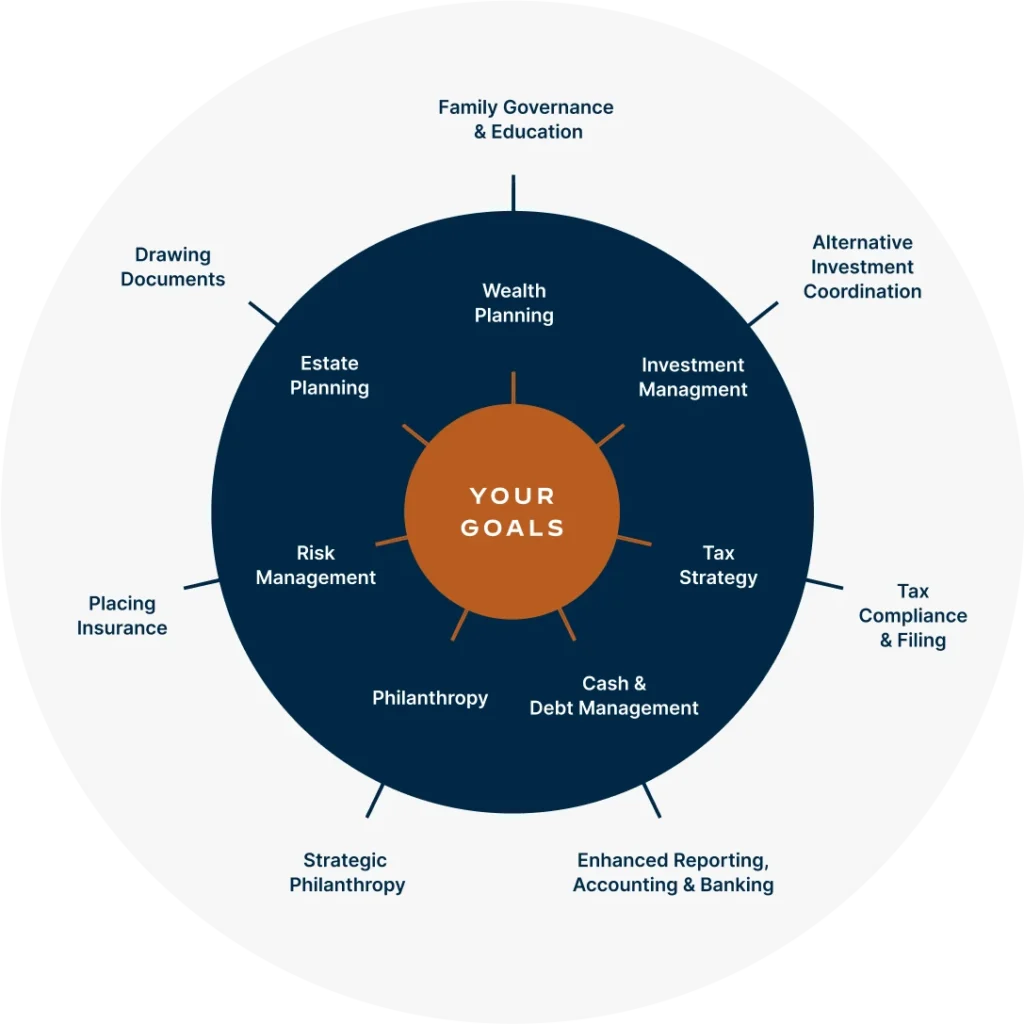
As part of our Total Wealth Management service, we discuss your investment strategy that is aligned with your dream life.
But it’s also important to understand that financial planning is an ongoing process—not a one-time event. As your life evolves post-liquidity, your financial plan should adapt with it, ensuring you remain on track to achieve your long-term objectives. That’s where a comprehensive financial planning process becomes invaluable.
Your key actions:



After a liquidity event, what’s next?Feeling too young to retire? You’re not alone. You might just need a new vision. Today, more entrepreneurs and early employees are experiencing financial success earlier in life. While these achievements are worth celebrating, it’s common to feel a bit untethered once the dust settles. The goals that drove you before might no longer apply — and that can leave you asking what comes next. |

| Step 3
Mastering the financial details and tax strategies |
Tax planning is a crucial part of preparing for a liquidity event, especially if you hold equity compensation or expect a meaningful increase in income. Without careful planning, taxes can take a larger share of your proceeds than expected and may affect your long-term financial goals.
Equity compensation can add another layer of complexity. RSUs, stock options, founder shares and other forms of equity may each be taxed differently depending on when they vest, when you exercise, when you sell and where you live.
For example, RSUs are generally taxed as ordinary income when they vest. That income can push you into a higher tax bracket, particularly in high-tax states like California. This is why it is important to ask questions such as: How much tax will I owe when my RSUs vest? Should I sell the shares right away or hold them for potential growth? How does this decision fit into my broader plan?
At this stage, modeling different tax scenarios can help clarify how your equity decisions, liquidity timeline and long-term goals fit together.
Review your stock options, RSUs and any other equity grants with your tax advisor and wealth manager. The goal is to understand what you own, how it may be taxed and how it fits within your broader financial plan.
RSUs are typically taxed as ordinary income when they vest. NQSOs are generally taxed as ordinary income when exercised, based on the spread between the exercise price and the fair market value at the time of exercise. If you hold shares after exercising, future appreciation may qualify for capital gains treatment depending on the holding period and other factors.
ISOs may offer more favorable federal tax treatment if certain holding-period requirements are met, but they can also trigger Alternative Minimum Tax, or AMT. Because ISO planning is highly nuanced, it is important to model potential outcomes before exercising.
Why this matters: Understanding your equity compensation can help you avoid tax surprises, manage concentrated stock risk and make more informed decisions about when to exercise, sell or hold.
Work with your advisory team to evaluate when to exercise stock options, sell shares or diversify a concentrated position. Timing can affect your tax liability, but it should also be considered alongside cash-flow needs, risk tolerance, company outlook and your broader goals.
For California residents, capital gains are taxed as ordinary income at the state level. This means both federal and state tax considerations may influence decisions about when to exercise options or sell shares. In some cases, spreading transactions over multiple years may help smooth taxable income. In others, a different approach may make sense depending on the transaction, market conditions and your financial picture.
Why this matters: Thoughtful timing can help you balance taxes, liquidity, diversification and long-term growth potential.
Several tax strategies may be worth reviewing as your liquidity event approaches. Their usefulness depends on eligibility, timing and your overall plan.
10b5-1 plans: These written trading plans allow company insiders to schedule future stock sales in advance. When structured properly, a 10b5-1 plan can help support compliance, create a disciplined selling strategy and bring more predictability to cash flow.
Qualified Small Business Stock, or QSBS: If you hold QSBS, you may be eligible to exclude a portion of capital gains from federal taxes when you sell. Eligibility rules are detailed, so it is important to confirm whether your shares qualify and how your state treats QSBS before relying on the benefit.
83(b) elections: If you received restricted stock or early exercised stock options before they vested, an 83(b) election may allow you to pay tax based on the value of the shares at the time of grant or early exercise rather than when they vest. This strategy can be powerful when shares have a low value and later appreciate, but it also carries risk and must generally be filed within a short window.
Why this matters: Strategies like QSBS treatment, 83(b) elections and 10b5-1 plans can have meaningful tax and planning implications, but they are highly dependent on timing and eligibility. Revisiting them with your advisory team can help ensure they still align with your liquidity timeline.
A liquidity event can significantly increase the value of your estate. Before that value is realized, it may be worth exploring whether trusts or gifting strategies could help transfer future appreciation to family members or other beneficiaries.
For example, a Grantor Retained Annuity Trust, or GRAT, may allow you to transfer potential future appreciation to heirs while managing gift and estate tax exposure. Annual exclusion gifts, family trusts or other estate planning strategies may also be appropriate depending on your goals.
Why this matters: Strategic wealth transfer planning can be especially valuable before a liquidity event, when assets may still have a lower valuation. Planning early may give you more flexibility to transfer wealth in a tax-efficient way and ensure your assets are distributed according to your wishes.
If charitable giving is important to you, a liquidity event can be a meaningful time to build philanthropy into your financial plan. Strategies may include contributing appreciated stock to a donor-advised fund, establishing a charitable remainder trust or exploring other giving structures.
Donating appreciated assets may help you avoid capital gains tax on the appreciation while generally providing a charitable deduction for the asset’s fair market value, subject to applicable limits. For some families, donor-advised funds, charitable trusts or family foundations may offer a way to support causes they care about while coordinating giving with tax and estate planning.
Why this matters: Charitable giving is first and foremost about making a meaningful impact. When integrated thoughtfully, it can also help you manage tax considerations and direct more resources toward the organizations and issues that matter most to you.
The closer you get to a liquidity event, the fewer planning options may be available. Reviewing your equity, taxes, estate plan and charitable goals early can help you make more informed decisions and reduce the pressure of acting quickly when the transaction arrives.
By coordinating these strategies with your wealth manager, tax advisor and estate planning attorney, you can build a plan that supports both the financial opportunity ahead and the life you want to create after the event.
And don’t forget…

The decisions you make after a liquidity event are just as pivotal as those leading up to it. One of the most important first steps is managing your concentrated stock to diversify and protect your wealth. A well-executed wealth preservation strategy, coupled with effective risk management for concentrated stock holdings, can This process involves diversification strategies that spread your risk across a range of investments tailored to your goals.
Here’s how you can continue to take care of your financial future:
Now that your liquidity event is behind you, it’s time to think beyond the concentrated stock that may have brought you here. A crucial next step is diversifying across multiple asset classes. This approach helps spread risk and creates a balanced portfolio designed to meet your income needs today while fueling growth for the future.
Your wealth manager will work with you to tailor this diversified portfolio to your unique goals, ensuring it aligns with your risk tolerance and long-term objectives. This approach aims to support your financial plan and align your portfolio with your broader lifestyle goals over time.
Why this matters: Holding onto concentrated stock can feel comfortable, especially if it’s been the source of your success. But diversification is key to reducing risk and creating a more stable financial future. By spreading your investments across various asset classes, you’re better equipped to weather market fluctuations and pursue new opportunities.
Additional resources:
How to Effectively Manage Capital Gains from Concentrated Stock Positions
How Tax-Aware Long-Short Strategies Help Diversify Concentrated Stock
A significant increase in wealth can bring new risks. Protecting your assets isn’t just about insurance—it’s about peace of mind. Reviewing and updating your property, casualty and umbrella insurance policies will help ensure they reflect your current financial situation. Additionally, setting up trusts and other entities can provide a layer of protection for your assets, ensuring that they’re transferred according to your wishes and shielded from potential creditors.
As your financial profile grows, so does your visibility, which can make you a target for identity theft or fraud. Consulting with security experts to enhance both your personal and digital security is a proactive step in safeguarding your identity and protecting your home. By taking these precautions, you’re taking proactive steps to help protect your wealth and prepare for what’s ahead.
Why this matters:
Wealth brings opportunity but also complexity. Taking steps to protect your assets and identity can help reduce the chance that unexpected risks disrupt what you’ve built. By proactively addressing potential threats, you can better position yourself to enjoy the outcomes of your hard work with greater peace of mind.
A liquidity event is a significant milestone that often signals a new phase in your financial journey. Your estate planning should also consider the value and structure of your equity compensation, ensuring it aligns with your broader financial goals. This makes it the perfect time to revisit your estate planning documents, including wills, trusts and powers of attorney. As life changes—whether through marriage, the birth of a child, or simply a shift in your financial circumstances—your estate plan should evolve too.
Post-liquidity, it’s also an opportunity to explore advanced estate planning strategies, like trusts for wealth transfer, which can help reduce tax exposure and preserve more of the value passed on to heirs or charitable causes. Tools such as Grantor Retained Annuity Trusts (GRATs) and Charitable Remainder Trusts (CRTs) may also support these goals as part of a comprehensive estate plan.
Why this matters:
Preparing for wealth transfer early can provide greater flexibility and help align your estate plan with your broader financial goals.
Wealth management is an ongoing process that requires continuous attention and adjustment. As your life evolves and market conditions change, revisit your financial plan to ensure it remains aligned with your goals. Regular reviews with your wealth manager are essential to keeping your financial strategy on track. These meetings allow you to reassess your portfolio’s performance, consider new opportunities and adjust your plan as necessary to stay on course toward your long-term objectives.

A liquidity event is more than just a financial transaction. It’s a turning point in your life. Whether you’re an employee, executive or founder, the decisions you make now can influence your future for years to come. But you don’t have to go it alone.
At Aspiriant, our experienced team of financial professionals is here to guide you through every step — from clarifying your goals and values to crafting a personalized strategy that considers market conditions, tax implications and your long-term vision. We bring the technical expertise and the human connection that makes all the difference.
This moment may feel like a turning point. And it can be. Let’s start a conversation about what’s possible and how you might shape what comes next.
For employees:
Are you an employee facing your first IPO? Schedule a consultation to discuss and explore tax-efficient strategies.
For founders and executives:
We’ve worked alongside founders and executives navigating similar transitions and can help you think through what’s next, with clarity and care.
For those exploring exit strategies:
Planning an exit? Our experienced team can help you start mapping out a thoughtful strategy that align with your needs.
| 10b5-1 Plan This is an advanced sales plan that allows you to sell your company shares at predetermined times and/or when the stock hits a predetermined sales price. It provides you with an affirmative defense against insider trading allegations, allowing you to sell shares, even if you learn material non-public information later. 83(b) Election Acquisition Alternative Minimum Tax (AMT) Alternative Investments Asset Protection Asset Sale Capital Gains Capital Gains Tax Charitable Remainder Trust (CRT) Concentrated Equity (or Concentrated Stock) Diversification Diversified Portfolio Donor-Advised Fund (DAF) Equity Compensation Estate Planning Exercise (Stock Options) Exit Strategy Initial Public Offering (IPO) Incentive Stock Options (ISOs) Liquidity Event Lock-up Period Long-Term Capital Gains Tax Mergers and Acquisitions (M&A) Non-Qualified Stock Options (NQSOs) Ordinary Income Tax Philanthropy Advisor Private Equity Buyout Qualified Small Business Stock (QSBS) Recapitalization Restricted Stock Units (RSUs) Secondary Market Sale Stock Options Tax Advisor Tender Offer Trust Umbrella Insurance |



Disclosure: This article has been updated since its original November 7, 2024 publish date.
Want the latest wealth management tips, investment insights and Aspiriant news delivered straight to your inbox. Sign up for regular Fathom updates so we can send you the most relevant content you selected below.