
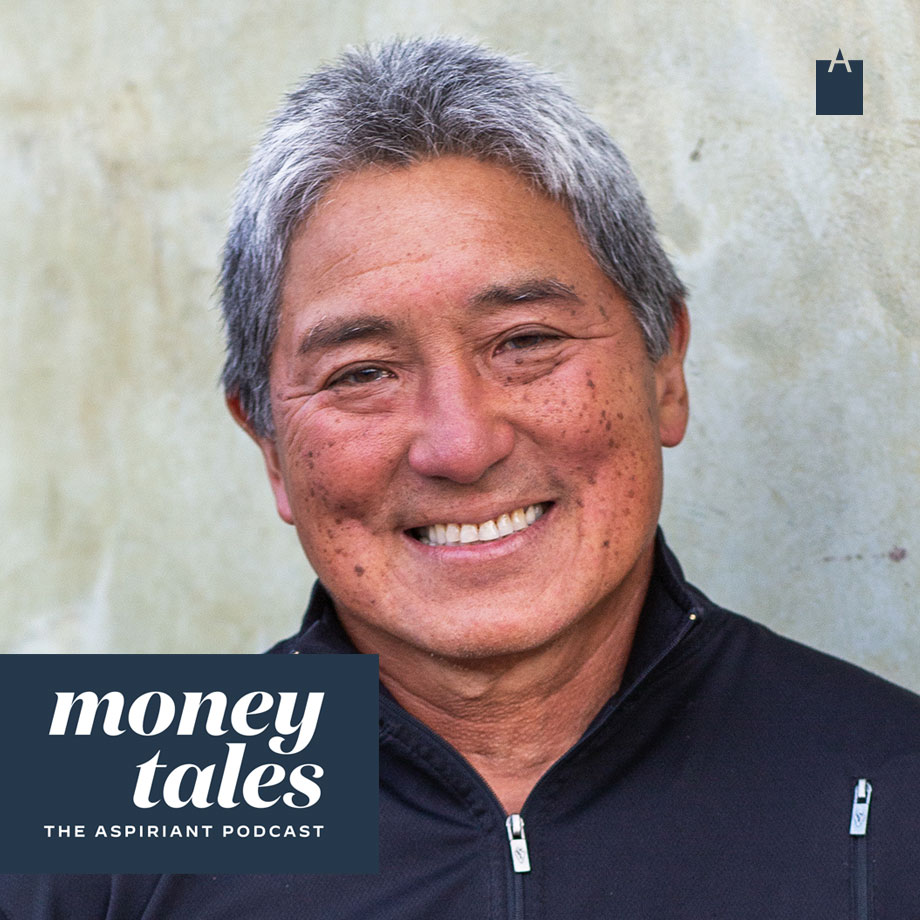
Welcome to the Money Tales podcast, where money gets personal. I’m Cammie Doder, and I’m Sandi Bragar. Today’s guest Guy Kawasaki flips the usual success story on its head with a string of jaw dropping, missed opportunities that became the foundation for a life measured by impact, not just outcomes. In this conversation, Guy takes us from being a kid on the wrong side of the tracks in Honolulu to Stanford, Apple and Canva, sharing how cars, connections, and a few spectacular, what was I thinking? Decisions shaped his relationship with money and ambition. Guy is a Silicon Valley original as one of Apple’s first evangelists. He helped introduce the Macintosh to the world today. He’s a bestselling author, venture capitalist podcast host, and a trusted voice on entrepreneurship, innovation, and making a positive difference through your work. Here are three key money takeaways you’ll hear in this conversation. First, sometimes the mistake that costs you money buys you freedom, perspective, and a more interesting life. Second, it doesn’t matter how you get your foot in the door at a company. What matters is what you do once you’re inside. And third, wealth shifts the question from earning to returning where giving becomes its own kind of financial clarity. Now it’s our pleasure to bring you Guy Kawasaki’s Money Tales. Welcome to the Money Tales podcast, Guy Kawasaki, we are so glad you’re here. I couldn’t think of a better way to spend the Friday afternoon. That’s very sweet Guy. I’ve been a big fan of your Remarkable People podcast and that got me thinking about remarkable money moments. Before we get into your money story, it would be interesting to share Cammie, Guy, what have been your remarkable money moments so far in life? I’ll start with one, Sandi and Guy. I’m sure you have, have some, but again, there’s many in there. It’s not about the amount of money, but more how it impacted me. And I was thinking about an investment my folks made when I was in college and it was to send me to a study abroad program in Salzburg. And. It really blew my mind getting out of the United States traveling because you don’t just in a study abroad, you typically will travel a lot. And I did. I took advantage of the Eurail Pass and was in all these different countries back in the day when they had borders in between them and different currencies. And when I think back to those pivotal moments in life, that gift really was remarkable and expanded my mind. I didn’t really think that one way is the only way maybe I did before that I had lived in really just a small little bubble when you travel. It was this opportunity not just to see sites and of course, and learn the history, that’s great, but meeting the people and experiencing the culture and then just being able to share yourself with other people and your own culture, it was incredible. How about you Guy? What’s coming to mind for you? Wait, so you want a money story. A remarkable money moment? I can tell you three, but unlike any of your other guests, this is going to be remarkable money, bad mistake moments. How’s that? Awesome. I’m in. We all have those. I’m leaning in. Yep. Many of you may stop listening as soon as you hear these stories because you’re going to think like, why am I listening to this dumbass after all the mistakes he’s made? So I’m going to tell you about three mistakes I made. So first of all, I was working for Apple. I started in 1983. I left in 1987 because I didn’t think Apple could possibly survive. So that’s kind of mistake number one. I figured that that mistake probably cost me $200 million. So that’s one story. The second story is that I returned to Apple and I worked there from 1995 to 1997. This is when Steve Jobs came back and when Steve came back I left. So that’s mistake number two. That’s another 200 million. So right now we’re at 400 million. And then two years later I saw Steve at a conference and he asked me if I would come back and run a part of Apple. And I laughed at him and I said, no. So that’s another 200 million. So now we’re at 600 million. So I don’t know why any of you would listen to the rest of this podcast. This is the guy that lost 600 million with three stupid money moments. Well, I’m curious guy with that on the table, how do you think your life would be different if you had made different decisions once, twice, or three of those times. Behind 600 million difference? What I. 600 Million here, 6 million pretty soon it adds up to real money, right? So how much profanity can your podcast handle? That’s a scary, a scary thought. Well, I would say that if I had stayed at Apple for mistake number one, mistake number two, or returned to Apple for mistake number three, I would probably be an executable asshole who took himself way too serious and started believing my own bullshit that I caused Apple to be a multi-trillion dollar company and I got guys golden touch and whatever I touch turns to gold and I would not have the experience of trying companies, starting companies failing. I certainly probably would not have a podcast because Apple is very paranoid and as you can see from the outside, you only hear about Tim Cook, right? You don’t hear about anybody below him or hardly ever. So the concept that Guy Kawasaki could have a podcast and be an Apple executive is a non-starter. I’ll tell you a funny story. There’s a guy named Mark Rober, and if you’re familiar with Mark Rober, he’s the guy who started the exploding Amazon shipping boxes in the Squirrel Olympics. So he went from NASA to Apple, and when he went to Apple, he started a YouTube channel and he had about 25 million subscribers to his YouTube channel, which is to say that Mark Rober had more fans on YouTube than Apple had on any social media, and they just could not handle that. So that’s why I mark Rober left. So I’m not saying I would’ve got 25 million followers, but hard to imagine that Apple would let me do the things that I’ve done. Let’s just say my decision making process would be very different from what Tim Cook has done in the last year. It sounds to me like while you’re calling these money mistakes that really your decisions created whole new opportunities for you and allowed you to become the person that you are now or continue being the person you were at that point and just getting better at it. Yeah, I mean that sounds like that’s worth about 600 million. Tell us a little bit about the beginning, if you will, of your life and your journey. When did you start to really learn about money when you were growing up, what was going on that taught you some important habits? Do you remember the Sandra Bullock movie where she was an undercover FBI agent in a beauty pageant? Oh yeah, absolutely. Definitely. They give you this softball question, if you could change anything in the world, what would you change? And she was talking about recidivism and all kinds of crime and stuff, and they said, you can’t talk about that stuff. You have to talk about world health and prosperity and equality and democracy and all those good things. Well, you’re wondering what the hell does this have to do with this answer? Well, the answer is that when you ask about these kind of money things and what was formative, a lot of people would want to say, well, I’ve dedicated my career to democratizing opportunity to making this a meritocracy to increase the level of education. That’s what I wanted to do my whole career, and that’s what I’ve done. I am not going to tell you that story. I’m going to tell you what truly did motivate me. Several stories. All right, so I am from a lower middle income part of Honolulu, Hawaii. To put it mildly, I was on the wrong side of the tracks. I did not live in the Mar-a-Lago equivalent of Hawaii when I was in high school. Some family friend, they had a Porsche 911 and I don’t know how, but somehow the guy gave me a ride in his 911, and I got out of that car and I said, guy, this is why you need to study and this is why you need to work hard. You were motivated. So now I’m still in high school. I go to high school across town on the good side of Honolulu because a sixth grade teacher in my elementary school convinced my parents that I had potential. So I should be outside of the public school system, put me in a college prep system, and thank you, God, my parents listened to her, made the sacrifices turning point in my life. So anyway, I had to catch the bus to and from school and twice in my high school at a bus stop or on the bus, I was robbed. And I said to myself, guy, this is why you need to study, and this is why you need to work hard because you don’t want to have to catch mass transportation the rest of your life and get hijacked all the time. Now, fast forward now I’m in college and I had a very close friend and he came from a very wealthy family as it happens in college sometimes for or Christmas or Thanksgiving or spring break or whatever, you go home with your buddies, right? Sure. So one year I go home with him and his father picks us up at the Phoenix Airport in a Rolls Royce. Okay? So now we go to his house, his backyard is the Arizona Biltmore Hotel Golf Course, and we go out to dinner and at the end of the dinner, his mother says, Guy, I’m really tired. Would you mind driving the car home with me? And I said, okay, whatever you want. And then the valet pulls up in a Ferrari Daytona. So I drove her Daytona home. I said, this is why you need to study and work hard. So I’m telling you the motivation for me, unlike Sandra Bullock was not meritocracy and democracy and clean water and clean environment. The motivation for me was not to change the world, but to change the car and also change the fact that you don’t live in someplace where you get hijacked on the bus. The lesson I derive from this is that it doesn’t matter how you get motivated, it just matters that you are motivated. So I have the most insipid, shallow, materialistic, pathetic motivation, but it motivated me. Guy. I think that is amazing. Thank you for sharing it. And I’m curious with that motivation, what was it like for you coming from a different socioeconomic background to the peers that you were going to high school with, and it sounds like to college with, because even if you’re motivated, that can still be pretty distancing. The real sort of dialectical leap happened in college. I got into Stanford, God knows why. I don’t even know why I applied. I would not get into Stanford today. There’s no fricking way I would get, I mean, I don’t have 4.5 GPA 1600 SATs. I didn’t start a not-for-profit in Africa. It’s 16. I’m not a violinist. I didn’t take AP physics in sixth grade, none of that stuff. So guy gets into Stanford, this is so long ago that being Japanese American was considered an oppressed minority. This is before tiger moms or tiger moms that back then they were working moms, not tiger moms. I get into Stanford, I get on Western Airlines, which no longer exists. I get on Western Airlines, I land in SFO, this van picks us up. We go to Stanford. And I thought, my God, this is where I was meant to be. I mean, people are starting these companies. People have Ferraris and Porsches and Mercedes, and there’s a lot of beautiful blonde girls. As you meet people, you find out, oh yeah, my father is Secretary of State, my father is senator. My father is the CEO of Intel. My father is this, my mother is this, whatever. And I’m like, holy shit, what have I walked into? And I mean, you can have several reactions to some of that, right? You can be depressed and figure out that you’re a piece of crap or you can get all jealous and make yourself crazy. But for me, I said, man, this is where I was meant to be. Not intimidated, more motivated once again. Not at all. Yeah. Is that how you made your way to Apple was through connections from Stanford? Yes. As a matter of fact, that’s another lesson. When you ask people how did you get your first job? You tend to hear these reinventions of history that I had a good GPA I interviewed well, I earned my way. I impressed Steve Jobs. And I can honestly tell you that none of that occurred. This best friend, the one that took me to Phoenix and got a ride in a Rolls Royce and drove a Ferrari, Daytona, he left after he graduated from Stanford, he got a Harvard MBA, he went to Hewlett Packard from Hewlett Packard, he was recruited to the Macintosh division, and he recruited me into the Macintosh division. So I am telling you that the only reason, literally the only reason that I got that job at Apple was nepotism. Nepotism. I am a true believer in nepotism. Now, let me justify that. Alright? So I’m not saying I’m Donald Trump Jr. But my theory is that it doesn’t matter how you get your foot in the door. What matters is what you do. Once your foot is in the door. You got to be able to stick around. I could have been a total loser. I could have been just Mike. Boy, that’s the guy’s name. I could have been just Mike Bo’s friend, total incompetent, schmuck, lazy, living off his friends, whatever. But no, that wasn’t me. I mean, he got me that job. And baby, the rest is history. I’m curious. In the eighties working for Apple with a whole different socioeconomic standpoint in the country, at that time, technology was just coming around. I remember our family’s first Mac. It was so exciting. It used to smile at me. You’re someone who’s motivated by money. How are you thinking about money early on in your career and how are you thinking about cars? Was your focus just to earn enough money to buy a sports car? I know. I want to know if he got ’em. I mean, I got to tell you that man, I have a high need for achievement. And the way you measure achievement, at least back then was success. And success is defined as the success of the company Apple. And if apple’s successful, your options are worth more. And if your options are worth more, you are worth more. And then you can buy the Mercedes and the Porsche and the Ferrari. I don’t know if I should admit this so openly, but that’s what motivated me. Now, there is slight send ness. Steve Jobs truly convinced us that we were changing the world, that we were preventing a 1984 George Orwellian Utopia fascist, where information was controlled and the government was just using everybody. And it was like Georgia, well, 1984, which is really what 2025 is shaping up to be. So yeah, and back then in Silicon Valley, truly, truly, we were motivated by changing the world to make the world a better place, to foster meritocracy, foster democracy, democratize computers. So you didn’t have to go to Stanford or work at NASA or work at a bank or work for the government to use a computer, wanted everybody to have a computer. That’s kind of the flip side of the bullishness in me. And I truly did buy into that vision that people should have a computer and they should be more creative and productive. It’s a long time ago and in Silicon Valley, and I got to tell you, man, if you were to look at the venture capitalists and the CEOs today in Silicon Valley, I don’t think you would draw the same conclusion. I think that Silicon Valley, at least at the highest, highest level, all they care about is making crypto successful, avoiding tariffs and making sure that long-term capital gains tax is low. Really? Say more about that guy. It’s really changed. You’ve seen a big, big change. And I’m curious if you have any thoughts on what’s the undercurrent, you’re a surfer, what’s the undertow that’s caused this to happen over now decades? I really don’t know. First of all, it’s not clear that it’s everybody in the valley. I think that the lower you go in an organization in the valley, the more people still have this dream of making the world a better place. On the other hand, the higher you go in an organization, the less that’s true, the higher you go. More and more it’s about crypto and tariffs and long-term capital gains. And I think more evil has been done in the name of, this is my fiduciary responsibility to the shareholders. I think companies have a fiduciary responsibility to society, not just your shareholders. That’s not a common sentiment. Is it a public market issue? You’re so worried on a quarterly return standpoint versus creating long-term value. That’s exactly it. If you look at what’s happening now, I don’t know how you convince yourself that what we’re doing now is going to create long-term value. I can see why you want to make sure that your iPhone parts don’t have tariffs for the short term, but what you have to do to ensure that there’s not tariffs on iPhone parts. I cannot see how that is the long term right thing to do. I just don’t ask me that question. I tell you one more thing. Since we’re on a money show, I have decided that I will never be worth more than 999 million, $999,000. I am going to limit my net worth. I don’t ever want to get billionaire’s disease. Luckily, I’m not at risk right now. But just in case something happens, well, I’m the chief evangelist of Canva, and Canva could do extremely well. I don’t think I’d be a billionaire, but I do not want to get billionaire’s disease because somehow it just ruins your mind. It ruins your morals and ethics. I don’t know what happens. So you think very deeply about money and its impact on society and its impact on an individual, and I’m one. Wait. What gave you the impression? I think deeply. That’s what I was hearing your. Answer. Yeah, I. That’s what I was hearing loud and clear. It sounded like deep thoughts to me, but we can use your language if you want to choose a different word. I’m curious, as Silicon Valley grew to what it was from when you started there to where it is today, and you developed through your career leaving Apple because you thought it was on the risk of crumbling, of making other choices, how has your relationship with money in your own personal life and your family’s life changed along the last few decades? I would say that because of Canva, primarily I am financially said, I don’t have to work another day in my life. But having said that, this is tricky territory because if I told you what kind of car I drive and where I live and all that, you might say, oh guy, you’re living the dream. But on the other. I’m curious about the car. I’ll be honest. Yeah. Okay. So I drive, this is a complex story. So I drive a Toyota Prius plugin hybrid. Okay, no, you are all thinking, oh, Sandra Bullock has triumph. Guy is such a humble guy. I want to know what’s in the garage. He drives a Toyota Prius. But in the spirit of full disclosure, I also have a Mercedes S class, which is the ultimate baller car. So I got the baller car and I got the green car, and I just bounced between those two. So I am not as good a person as you could have believed 60 seconds ago. You did it though. The young Guy must be smiling inside of you, of. The irony is that I sold a Porsche to buy the S class, and it’s because it was getting too hard to get in and out of a 911. They are low to the ground. I am deaf and I have a cochlear implant. And when you have a cochlear implant, what happens is that it magnifies all the sounds. All the sounds, not just the voices. So the 911 was too hard to get in and out of it was too noisy and it was just too rough on my butt. So at the point where I could truly afford any sports car, my body couldn’t handle it anymore. The way it should work is you should start off with a great car, and as you get older, your car gets worse and worse. That’s the way it should work. It’s a good money lesson right there. What is a chief evangelist? How do you describe that? I love it. I’m a passionate brand person. So evangelism comes from a Greek word that means bringing the good news. So what an evangelist does is bring the good news. I brought the good news of Macintosh, how it would increase people’s creativity and productivity. I am bringing the good news of Canva, how Canva will make you into a better communicator because it has democratized design. So what an evangelist does is bring the good news. Beautiful. Sounds like a great role to have. Yeah. Well, okay, so just so you understand something, the key to evangelism is not the evangelist. The key to evangelism is you have to have good news. Evangelism doesn’t work with shit. You need to have something good to evangelize. Now, there are other ways to make shit successful as we have seen over and over, but evangelism is not the way because with evangelism you have to have to something great so that it is good news and people believe in it as much as you do. That’s the key to evangelism. I call this guy’s golden touch, and guy’s, golden touch is not that whatever I touch turns to gold, guy’s, golden touch is whatever is gold guy touches. It’s a good strategy. Keep that up for sure. Guy, you mentioned before that your life is very financially comfortable. And I’m wondering with that in mind, how and when are you thinking about money? I believe that one’s life is divided into three parts. So part one is where you learn, you learn at the school, you learn at Stanford, you learn in your first few jobs. So step one is learn. Step two is earn. So now you take your education and you earn money. And then step three is you return, and I’m in the return phase of my life. So I’m trying to return not just money, but I’m trying to support things and support people so that at the end of my life I can say I did more than ensure that crypto was successful and long-term capital gains was low. Hey guy, you, I was reading your bio in preparation for this conversation, and I believe you have mentored and invested in startups, a number of them. I’m curious what that experience has taught you about risk taking. Risk is a funny thing, and everybody’s got different risk tolerance, and I’m just curious what it’s taught you in this journey. I hesitate to tell you this because one of the dangers of a podcast or a business book is that it’s kind of like last in first out. So if you hear guy and guy says, you got to take risks, and if that’s the last thing you heard is, okay, I got it. I got to take risks. And then the next day you hear, I dunno, Warren Buffet and Warren Buffet says, you should minimize your risk. You need to diversify. Okay, so tomorrow’s lesson is diversify, which is contrary to guy. So who do I listen to? Listen, I’ll tell you how Silicon Valley works. We throw a lot of shit up against the wall, about one out of a hundred things stick, and then we go up to the wall and we paint the bullseye around what stuck. And we see we are so fricking smart. The bulls. Up. I knew it was going to stick. Yeah, yeah. So what I’m trying to tell you is I started with Macintosh and Apple, I’m ending with Canva. I can spin a tale that I am so fricking smart, I’m omniscient, I’m omnipotent. I worked for Apple, I worked for Canva. I was a Wikipedia, a Board of Trustees. I was a Mercedes-Benz Brand Ambassador. Man, my shit doesn’t stink. I did everything right. Well, I could tell you something between Apple and Canva, there’s about 40 years of making mistakes and I don’t bring that up, right? I mean, I don’t go to the wall and say, okay, I did that wrong, I did that wrong, I did that wrong. I did that wrong. I did. And 99 points later, I say, okay, I did that one right? I only talk about Apple and can, what. I’m hearing is diversify your, and you never know you might get that spaghetti that’s stuck. To go back to my very original story about how I quit Apple twice and turned Steve down, one of the lessons I learned is that the grass is not always greener. And sometimes you should water and fertilize the grass you’re standing on because if you constantly switch jobs trying to optimize and perfect your career, when all is said and done, maybe it was better that you only worked at three or four jobs in your life, not 30 or 40. I like that metaphor a lot. But the caveat that I am one data point, right? So the next guess you have might’ve said, yeah, I switched jobs every two years. I did that for 15 years, and finally I got lucky. And then that’s why I am the crypto king and I’m a venture capitalist. So that lesson would be directly opposite of mine. Maybe it’s knowing when you’ve got something right. Sandy and I have been lifers at spirit, so I think we both sort of said, yeah, we found what’s right for us. And maybe that’s the key learning where, what’s right for you. I appreciate the humility of just being honest, of getting through our own lives, our own way, figuring out the best next action to take based on the information we have at any particular time. It is quite fun that you can put so many dollars in zeros next to them as you look back on some of the decisions you made. Well, but listen, I’ve only talked about 600 million. I can give you another story that’s 2 billion. Let’s hear it. Bring it on. All right. So after I left Apple, I was living in San Francisco with my wife and with my first son. She was in beta with my second son, and we were living the dream. I was writing, I was speaking, I didn’t work for anybody. I could do whatever I want. Stay at home all the time. And I get this phone call from a guy named Michael Maritz of Sequoia. Sequoia is probably the most successful venture capital firm. It’s them or Kleiner Perkins. So anyway, Michael Maritz says, two PhD students from Stanford. They’re starting a company. We’re looking for a CEO. Would you like to interview? And I said, Mike, I got to tell you something. I have one child. Now I have one more in the shoot. And the location of your company is at least one hour away. I would be driving two hours every day. Mike, I got to tell you, man, I just am not interested in even interviewing. So now you want to know which company that is. And of course I will tell you it was Yahoo. Now, Yahoo has kind of disappeared at this point, but let’s say that I had taken the interview. Let’s say I got the job. That’s a pretty good bet because when the lead investor calls and asks you to interview, that guy has already made a decision. You’re not calling some dumb ass randomly saying, I’m calling a hundred people. One of you, lucky schmucks is going to be it. I mean, when he calls you and says, interview. Got to get thing going. You can pretty much assume you pass the test, right? Yeah. So I would’ve been the first CEO, the first adult supervision at Yahoo. And so I probably would’ve got 5% and 5% of Yahoo at its peak would probably worth for me back then $2 billion. Well, it’s a good thing you didn’t take that job because that would’ve put you in the billionaire bucket that you don’t want to be in. It’s really fun to hear your stories. I am curious though, is there a true regret as you look back on some of the decisions you made and opportunities that you decided not to take? I have several thoughts about this. So first of all, what good is a regret? Because I cannot change it. I mean, seriously, okay? You can regret all you want, but it ain’t going to change anything. So that’s number one. Number two, like I said before, if I had stayed at Apple this whole time, I really probably would be even more of an asshole than I am right now. So that’s number two. Number three is that because I did stay at Apple, I had a lot more experiences. I started companies. I was a writer, a speaker. I’ve written 19 books. There’s no way Apple would’ve let me write 19 books. I would be more of an asshole with no books under my belt. Sounds like the answer’s no. How much of that is I’ve thought about it and I’ve concluded intelligently that the answer is no. Or because I’m such a dumbass, I have convinced myself that I didn’t make a mistake. Either way. It sounds like you’ve had a very full life with a lot of adventures. Tell us Guy, what’s your next money conversation going to be and who will it be with? It will be with my wife this weekend as we decide who we’re going to give money to for calendar year 2025. It sounds like a really important conversation. That is really important. Two of my favorite organizations, one is called Digital Nest. Digital Nest is a Watsonville nonprofit, and what it does is it provides training for primarily Hispanic young people. So they have a career other than agriculture, which means instead of picking strawberries, you can do something digital. So I think that is such a great idea to give them more opportunity. And another favorite organization of mine is Signal, because I think Signal the highly secure private messaging app. I think that Signal is an essential tool for the preservation of democracy and freedom. Wow, that’s powerful. Those are two. Firms you support. Well, I also support Wikipedia and NPR. Yeah. Are we seeing a trend here? Yeah. I think it’s wonderful. Well, guy, it’s been an absolute pleasure speaking with you on Money Tales. Thanks for sharing your fantastic stories. And they’re funny. I might have to revisit the movie we’ve discussed all afternoon. Remind myself of. Miss Congeniality. Oh, wow. I couldn’t remember the name. Miss Congeniality. That’s it. There you go. That’s it. That’s it. Yeah. How many people can say that they have determined their light goals based on Sandra Bullock and Miss Congeniality? That’s a high bar. Heard. It? Here’s. A high bar. Details to scale or crossed. Thank you. Again, Guy. What a treat. Oh, it’s my pleasure. Thanks for listening to the Money Tales podcast. If you’ve enjoyed this episode, share it with someone you think would benefit from listening and leave us a review on your favorite podcasting platform. Your ratings and reviews help more people find our podcast. If you’re inspired to gain clarity and peace of mind about financial matters, don’t hesitate to reach out to our team at Aspiriant. Go to aspiriant.com/startadialogue, or you can email Sandi and me at podcasts@aspiriant.com. See you next time.
Today’s guest, Guy Kawasaki, flips the usual “success story” on its head with a string of jaw-dropping missed opportunities that became the foundation for a life measured by impact, not just outcomes. In this conversation, Guy takes us from being a kid on the “wrong side of the tracks” in Honolulu to Stanford, Apple, and Canva—sharing how cars, connections, and a few spectacular “what was I thinking?” decisions shaped his relationship with money and ambition.
Guy is a Silicon Valley original. As one of Apple’s first evangelists, he helped introduce the Macintosh to the world. Today, he’s a bestselling author, venture capitalist, podcast host, and a trusted voice on entrepreneurship, innovation, and making a positive difference through your work.
Guy is the chief evangelist of Canva, host of the Remarkable People podcast and author of eighteen books including Think Remarkable. He is an adjunct professor of UC Santa Cruz and trustee of the University of Hawaii Foundation. He was the chief evangelist of Apple, trustee of the Wikimedia Foundation and brand ambassador of Mercedes-Benz. Kawasaki has a BA from Stanford University, an MBA from UCLA and an honorary doctorate from Babson College.
Guy Kawasaki’s journey reminds us that success isn’t defined only by wins, titles, or perfect timing. Missed opportunities, unexpected turns, and “what was I thinking?” moments often shape our values, ambitions, and relationship with money just as much as the highlights do.
If you’re reflecting on your own path—whether navigating career pivots, weighing new opportunities, or redefining what impact and success mean to you—an Aspiriant advisor can help you explore your financial decisions with perspective, purpose, and intention.
Follow Money Tales on Spotify, Apple Podcasts, or YouTube Music for more candid conversations about money, mindset, and the stories behind major life choices.
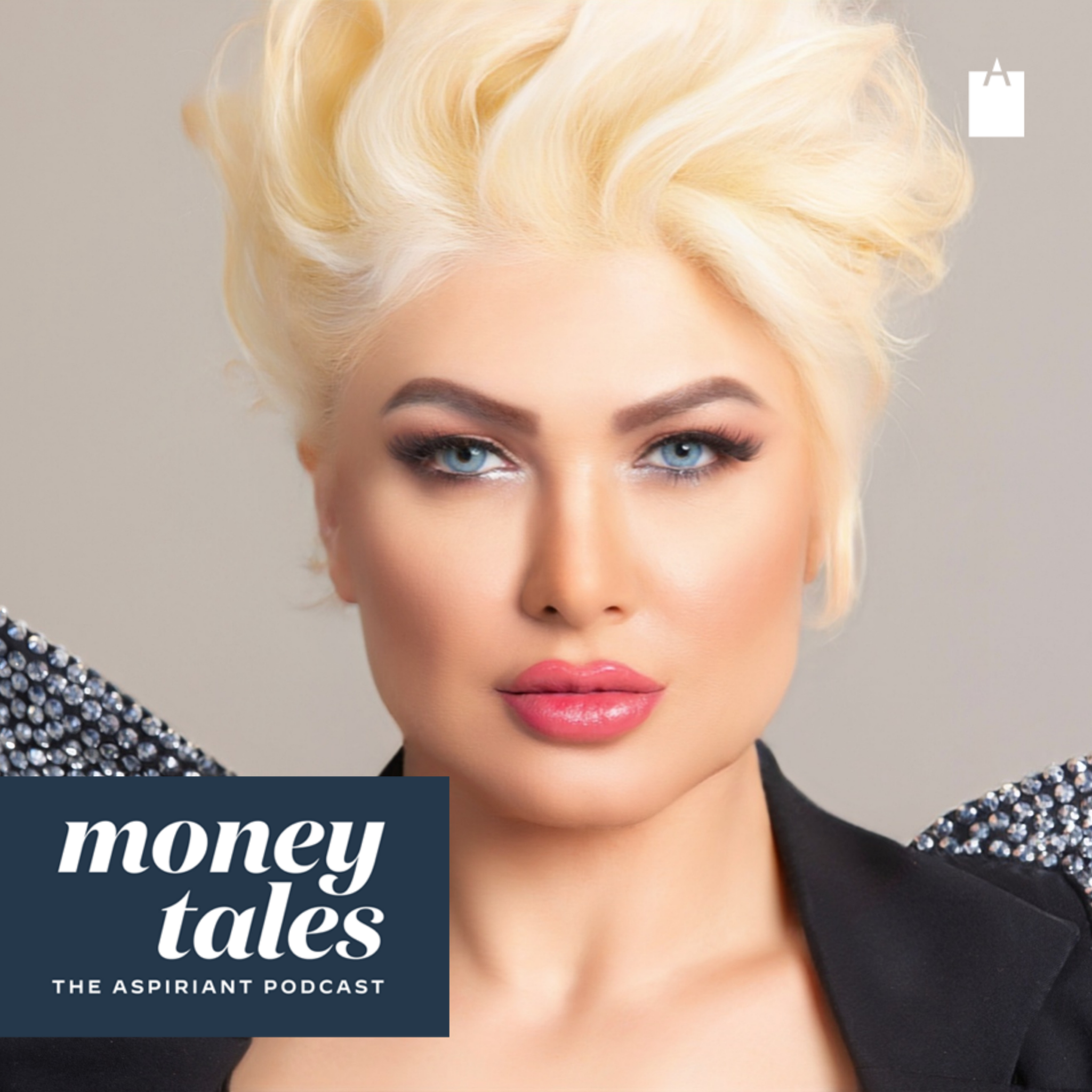
with Neda Patra
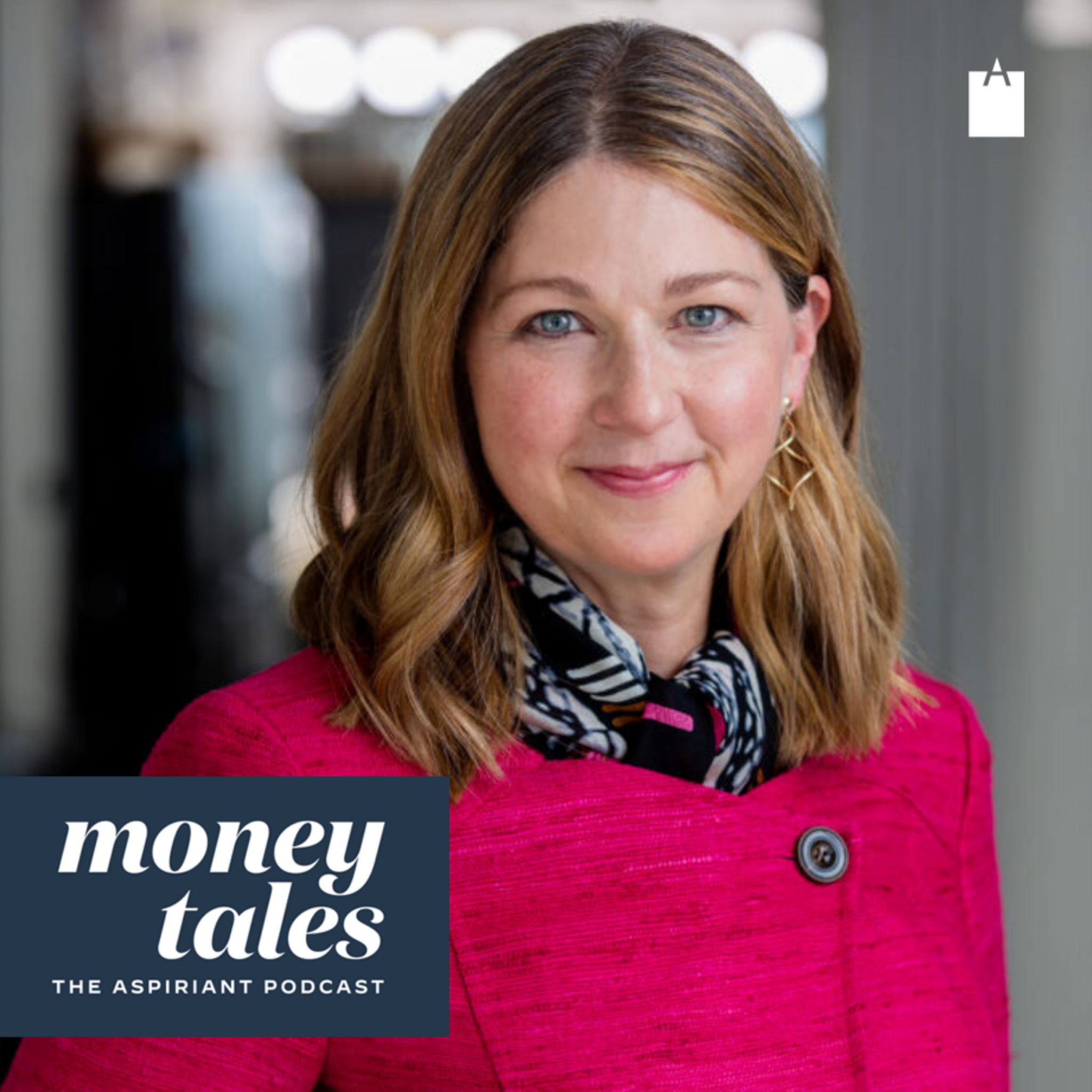
with Anne Lester
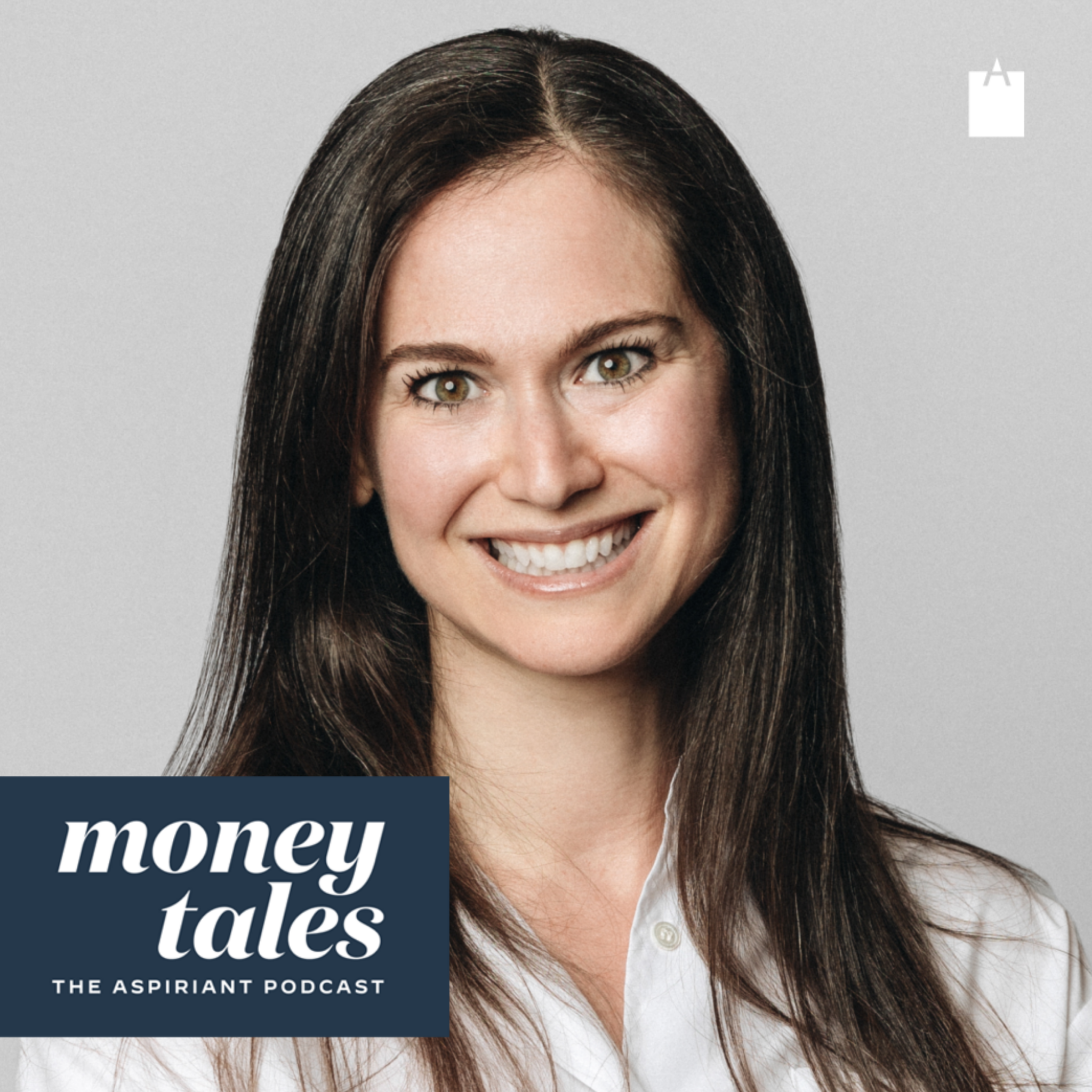
with Lindsay Jurist-Rosner
with Margaret Andrews
with Bobbie LaPorte
with Uday Wagle
with Caroline Gaynor
with Dr. Charles Eckhart
with Jane Bond
with Denise Dunning
with Sandi Bragar and Cammie Doder
with Uma Viswanathan and Johann Berlin
 Talk to us